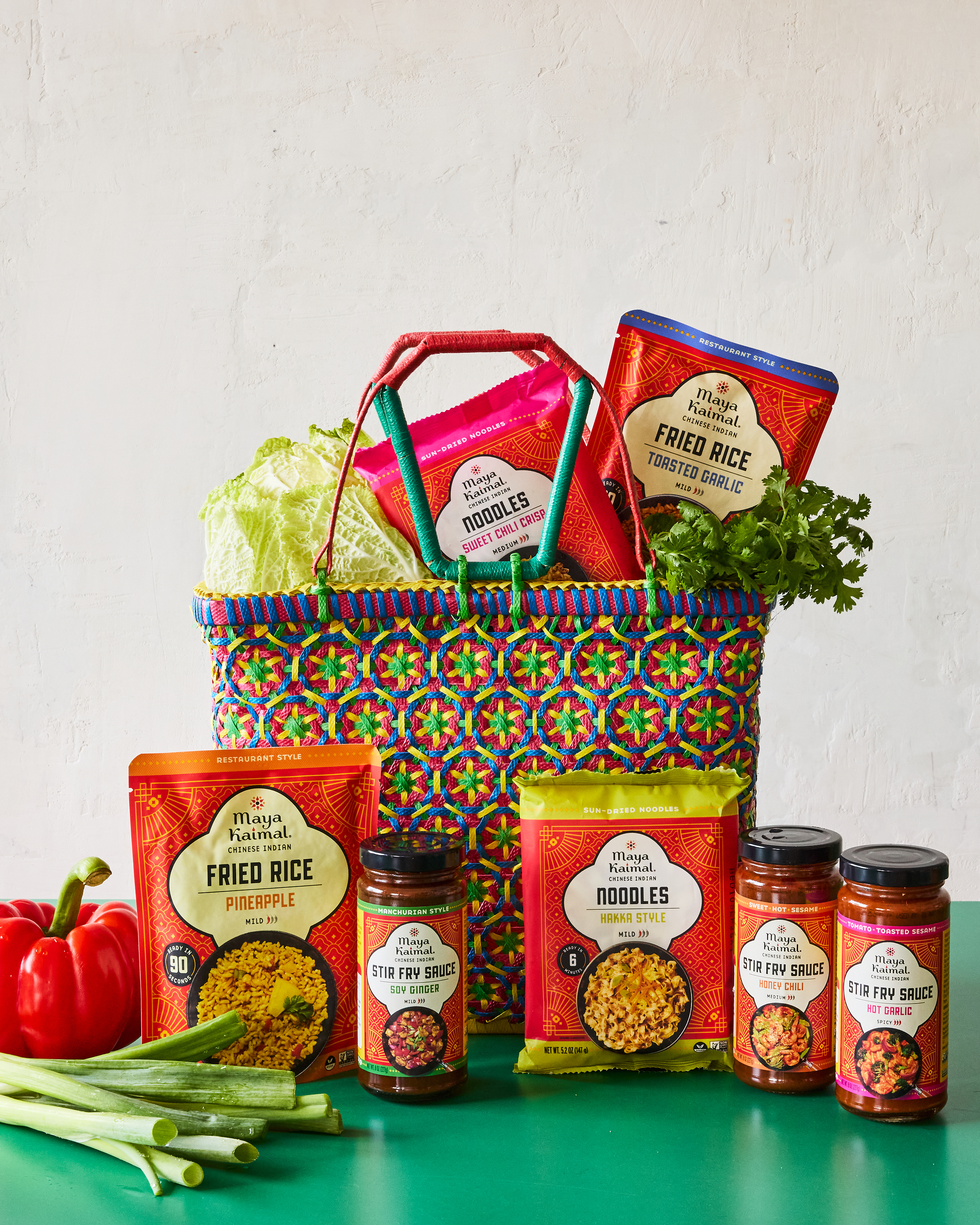
Maya Kaimal Foods is entering the Indo-Chinese segment with a seven-SKU line now stocked at Whole Foods Market and Sprouts Farmers Market nationwide, marking what the brand positions as the first mass-market Chinese Indian assortment available in the U.S. retail channel.
The Line
The launch spans three formats: ready-to-eat fried rices (Pineapple and Toasted Garlic), ready-to-eat noodles (Hakka and Sweet Chili Crisp), and three stir-fry sauces (Soy Ginger, Hot Garlic, and Honey Chili). Whole Foods carries the fried rices and noodles chainwide; Sprouts carries the fried rices and the full stir-fry sauce trio. The ready-to-eat formats compete directly in the fast-growing refrigerated meal-solution set, while the sauces play in the condiment and cooking-sauce aisle alongside a crowded field of Asian-inspired LTO and permanent SKUs.
The cuisine category itself — Indo-Chinese, sometimes called Hakka Chinese — traces to the Chinese immigrant community that settled in Kolkata during the 19th century. Its flavor architecture layers soy, ginger, and wok char against Indian aromatics like green chili and tarka-style tempered garlic. Founder Maya Kaimal, a Saveur alum and Julia Child Award–winning cookbook author who launched the brand in 2003, cited a direct personal connection. "Chinese Indian food has been part of everyday life in India for generations and a huge source of joy for me," she said. "I can't wait for American home cooks to experience that same thrill of bold, craveable food, but in minutes."
Retail Context
The launch is strategically timed for the natural and specialty channel, where globally-inflected sauces and meal kits have been outpacing center-store averages. The brand already holds the No. 1 position in the Indian simmer sauce category and has used that distribution foundation — Whole Foods, Costco, Amazon, and Sprouts, among others — to extend into adjacent cross-cultural formats. Its Indian Style Chili Crisp, which fused the tarka technique with Chinese chili crisp tradition, telegraphed this "East Meets East" direction before the full line was ready. The Chinese Indian launch represents a more complete category build: retailer buyers can construct a destination endcap or cross-merchandising set across starch, noodle, and sauce formats from a single brand.
All SKUs carry Non-GMO Project certification and are free of preservatives and artificial flavors — table stakes for the natural channel but increasingly relevant as conventional grocers expand their clean-label ethnic-food sets. The ready-to-eat positioning also aligns with ongoing operator and retail interest in meal-solution products that compress weeknight prep time, a segment that gained significant shelf space during the pandemic and has held much of those gains.
What It Means for the Segment
For buyers and category managers tracking the Asian-inspired sauce and meal-kit segment, Maya Kaimal's move signals that Indo-Chinese is graduating from niche ethnic-aisle curiosity to mainstream natural-channel priority. The brand's existing velocity data in simmer sauces gives it credibility with retail partners to justify incremental facings. The stir-fry sauce format, in particular, positions the line for potential foodservice-adjacent use — meal-kit operators and fast-casual concepts sourcing retail-parallel sauces for scratch-cook applications have drawn from this supply pool before. Whether Maya Kaimal pursues foodservice distribution for the new line has not been disclosed, but the format lends itself to that channel extension.
Written by Michael Politz, Author of Guide to Restaurant Success: The Proven Process for Starting Any Restaurant Business From Scratch to Success (ISBN: 978-1-119-66896-1), Founder of Food & Beverage Magazine, the leading online magazine and resource in the industry. Designer of the Bluetooth logo and recognized in Entrepreneur Magazine's "Top 40 Under 40" for founding American Wholesale Floral, Politz is also the Co-founder of the Proof Awards and the CPG Awards and a partner in numerous consumer brands across the food and beverage sector.