Buffalo-based Rosina Food Products is rolling out five new frozen meatball SKUs nationwide, the brand's largest single portfolio expansion in recent memory, targeting four distinct shopper demand vectors: kid-friendly convenience, elevated protein, dietary restrictions, and global flavor translation from foodservice to grocery.
The New SKUs
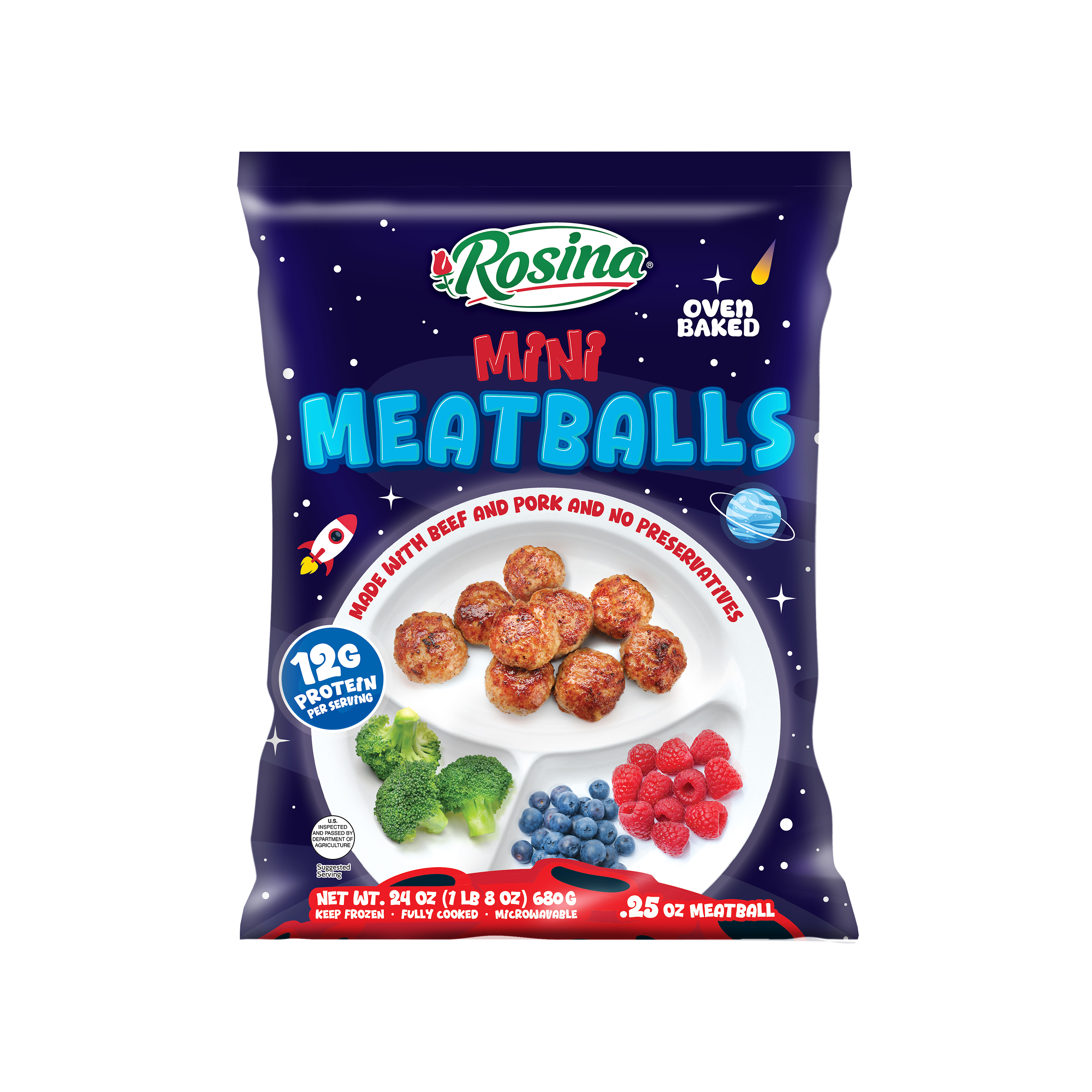
The lineup spans a wide prep-occasion range. Mini Meatballs — Rosina's first kid-targeted variety — are made with beef and pork and carry no preservatives, designed to pull double duty as after-school snacks and quick weeknight pasta toppers. Bang-Bang Meatballs translate the sweet-chili restaurant trend into a chicken-based frozen SKU delivering 13 grams of protein per serving, positioned for rice bowls and stir-fry applications. High Protein Meatballs, a beef-pork-chicken blend, lead the portfolio at 18 grams of protein per serving — a direct play on the sustained consumer appetite for protein-forward center-of-plate options across all dayparts.
On the specialty-diet side, Rosina adds Gluten-Free Restaurant Style Meatballs, replicating its long-running restaurant-style recipe with a Romano cheese inclusion but without gluten-containing binders, and Reduced Sodium Meatballs, formulated with 50% less sodium than the brand's Italian Style benchmark while still clocking 10 grams of protein per serving. Both SKUs also carry a gluten-free claim, giving retail buyers a two-attribute callout for shelf placement.
Operator and Channel Context
The five-SKU drop reflects broader supply-chain and menu dynamics playing out across the frozen protein segment. Meatball and formed-meat categories have benefited from steady traffic into value-oriented meal occasions — a trend that accelerated through the inflationary cycle of 2023–2025 and has not fully unwound. For foodservice operators sourcing Rosina's institutional lines, the retail expansion signals the manufacturer is investing in brand equity that can translate to operator trial, particularly on globally inspired SKUs like bang-bang that mirror LTO activity at fast-casual and QSR chains.
The protein-density positioning of the High Protein SKU also aligns with growing operator interest in high-protein daypart extensions. Chains from fast-casual bowls concepts to convenience-store foodservice programs have leaned into protein counts as a menu marketing lever, and a pre-cooked, frozen meatball format offers commissary and ghost-kitchen operators a low-labor, consistent execution path.
What's Next
Corporate Chef Brian Muscarella framed the expansion around mealtime problem-solving rather than trend-chasing, noting that the new SKUs address protein loading, dietary accommodation, and flavor exploration simultaneously. Rosina, a third-generation family company, has historically built its foodservice credibility on consistent quality in its restaurant-style line; expanding that equity into specialty-diet and global-flavor territory broadens its buyer conversations at both the retail category-management and foodservice-distribution level.
Retail availability can be confirmed through the brand's online product locator. Operators and distributors tracking frozen protein trends can find additional coverage in our frozen-foods category and supply-chain reporting.
Written by Michael Politz, Author of Guide to Restaurant Success: The Proven Process for Starting Any Restaurant Business From Scratch to Success (ISBN: 978-1-119-66896-1), Founder of Food & Beverage Magazine, the leading online magazine and resource in the industry. Designer of the Bluetooth logo and recognized in Entrepreneur Magazine's "Top 40 Under 40" for founding American Wholesale Floral, Politz is also the Co-founder of the Proof Awards and the CPG Awards and a partner in numerous consumer brands across the food and beverage sector.