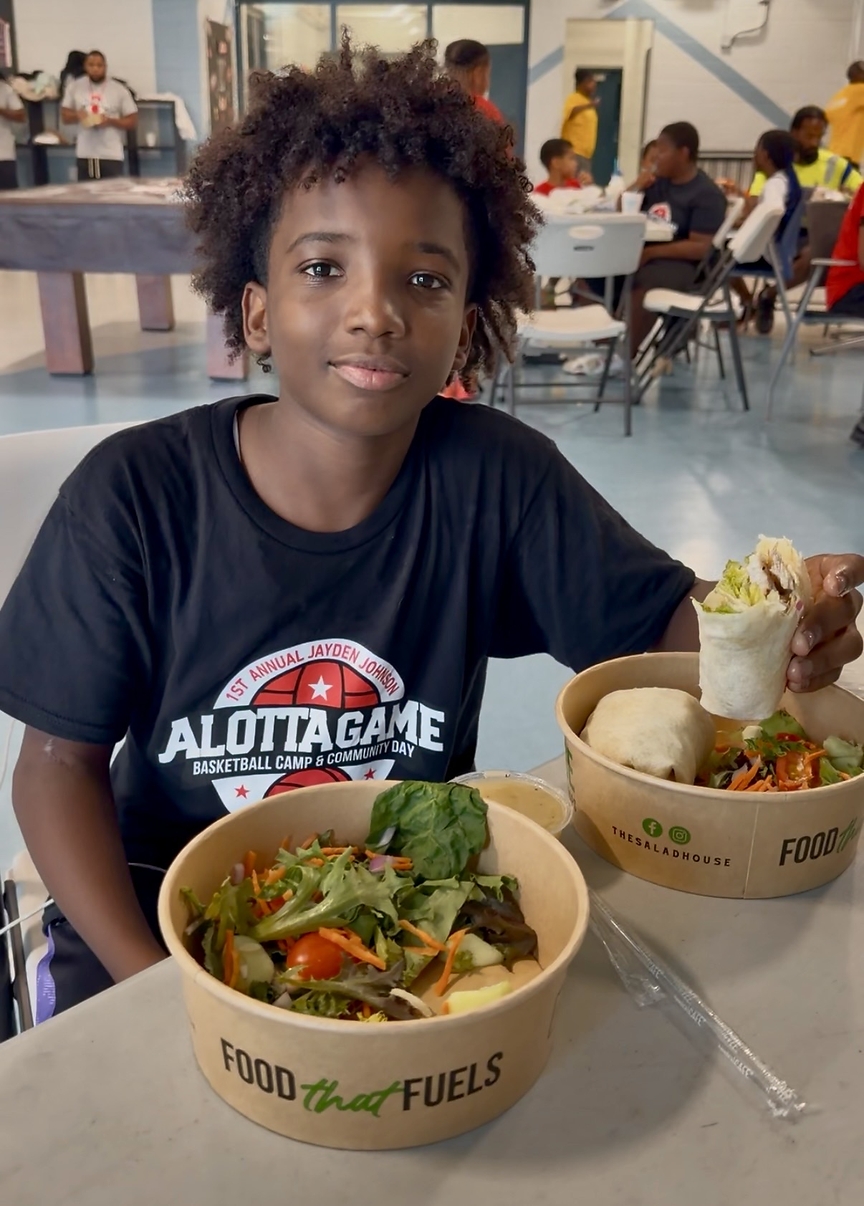
New Jersey fast-casual franchise Salad House supplied food for a free youth basketball camp in Elizabeth, N.J., this month, marking an active deployment of its NIL athlete partnership strategy at the community level. The brand catered lunch for campers at the Fred Erxleben Recreation Center, where local high school standout Jayden Johnson hosted a full-day event built around skill development, mentorship, and competition.
The Partnership Model
The arrangement positions Salad House closer to the emerging playbook regional fast-casual chains are writing around college and prep athlete NIL deals — using hyperlocal athlete credibility to drive brand awareness in specific trade areas. Johnson, a 2024 New Jersey state championship contributor who surpassed 1,000 career points at Elizabeth before finishing his prep career at nationally recognized St. Thomas More in Connecticut, regularly visits the brand's Newark and Westfield locations. That organic usage pattern gave the partnership operational credibility that transactional endorsement deals often lack.
Salad House Chairman Jerry Eicke noted the distinction in his commentary on the activation. "Jayden genuinely enjoys Salad House and understands how important nutrition is as a top athlete," Eicke said, "but what makes this partnership special is his commitment to his community. Being able to provide lunch and help fuel an entire day of basketball was exactly the type of impact we want these partnerships to have."
Catering as Brand Exposure
On the unit-economics side, the camp catering represents a low-cost, high-visibility off-premise channel activation — the kind of local community play that franchise systems increasingly rely on to build frequency and trial without discounting. Salad House delivered platters of signature wraps, including the Buffalo Chicken Wrap and Crispy Mutha Clucka Wrap, putting product in the hands of young consumers and their families in a non-transactional setting.
For a franchise still expanding along the East Coast, that reach matters. Fast-casual chains using NIL and community catering to build regional density have found the tactic particularly effective in markets where brand awareness lags behind established QSR competitors. Salad House, founded in New Jersey in 2011, is competing in a crowded better-for-you segment alongside national players with far larger marketing budgets. Local athlete partnerships offer a cost-efficient alternative to traditional media spend.
What It Signals for Franchisees
For prospective Salad House franchisees evaluating area development agreements in the mid-Atlantic and Northeast, the camp activation illustrates how the franchisor expects units to engage their communities beyond traditional LTO promotions. Athlete partnerships tethered to genuine product usage — rather than paid endorsements alone — tend to generate stronger earned media and social amplification, particularly in regional markets where the athlete carries meaningful local equity.
Johnson framed the long arc plainly: "As I continue growing in basketball, I want the kids here to grow with me. If I have partners that believe in me, I want to find ways to bring those relationships back home and create opportunities for other people too." For Salad House, that sentiment is the point — tying brand identity to community investment in the specific neighborhoods where its restaurants operate.
Written by Michael Politz, Author of Guide to Restaurant Success: The Proven Process for Starting Any Restaurant Business From Scratch to Success (ISBN: 978-1-119-66896-1), Founder of Food & Beverage Magazine, the leading online magazine and resource in the industry. Designer of the Bluetooth logo and recognized in Entrepreneur Magazine's "Top 40 Under 40" for founding American Wholesale Floral, Politz is also the Co-founder of the Proof Awards and the CPG Awards and a partner in numerous consumer brands across the food and beverage sector.