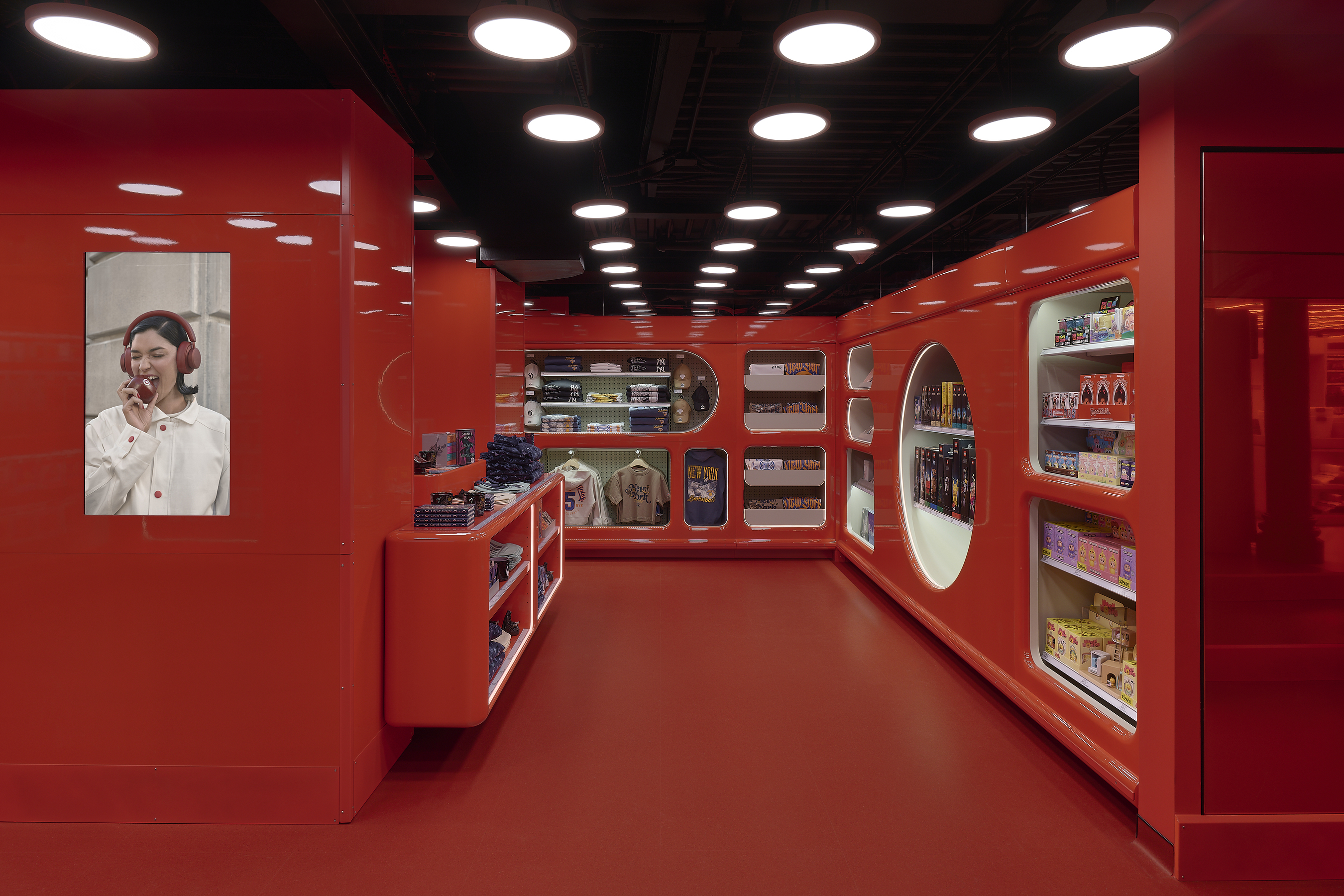
Target Corporation's (TGT) SoHo flagship is now fully operational as a retail concept lab, with the completion of its lower-level transformation adding a New York-inspired food market, a curated grab-and-go snack destination, and a rotating seasonal bar to the store's food and beverage footprint — roughly a year after the upper floors debuted.
The Food Floor
The reimagined food and beverage space is positioned as a modern city market, designed to reframe the routine grocery run as a discovery experience. Adjacent to it, The Snack Bar translates New York streetscape culture into a series of neighborhood-inspired grab-and-go stops stocked with emerging brands including Wilde protein chips and Cadootz. A Seasonal Shopping Bar layers in sweet and savory items from Target's own Favorite Day label, rotating assortment to drive repeat visits — a daypart and return-trip strategy familiar to convenience and specialty grocery operators.
The food concepts sit alongside four other experiential destinations on the lower level: Bullseye Loft (shoppable home vignettes), Balance Mart (wellness and Korean beauty), Explorers' Lab (interactive toys), and a freestanding seasonal fixture. Together, they complete Target's push to make its highest-frequency categories — food, wellness, and home — destinations rather than commodity aisles.
NYC Scale and Context
The SoHo location operates as one of more than 40 Target stores in the core New York City market, part of a 109-store New York statewide network employing more than 20,000 team members. That urban density gives Target a meaningful off-premise and convenience-adjacent footprint in a market where food and beverage discovery — think specialty grocers, fast-casual clusters, and bodega culture — sets a high bar for experiential retail.
Target's food-as-experience pivot lands amid a broader trade-up moment in retail foodservice. Specialty grocery chains such as Erewhon and Foxtrot's successors have demonstrated that curated food environments drive basket size and visit frequency among urban consumers. For a mass retailer operating at Target's scale — more than 2,000 U.S. stores — a concept like SoHo functions as a live test-and-learn environment for formats that could eventually inform food and beverage presentation across the broader network.
Apparel and accessories has ranked as SoHo's highest-performing category since the upper floors opened, and Target's own consumer awareness research found that nearly two-thirds of shoppers familiar with the location say it makes the brand feel more stylish. Extending that perception into food and beverage — a category where Target competes directly with grocery, convenience, and club-store channels — is the strategic leap the lower-level buildout represents.
What Comes Next
Target has signaled that 2027 will bring SoHo-exclusive products, collectibles, and experiences, adding scarcity and destination value to the food and beverage mix. For the foodservice and specialty-food supplier community, that pipeline represents a potential proving ground: brands that earn shelf space in SoHo's snack bar or seasonal bar gain exposure in one of the country's most traffic-intensive retail corridors. Operators tracking retail foodservice trends and grocery-adjacent channel strategy should watch whether Target exports any SoHo food formats to its small-format urban stores as the concept matures.
Written by Michael Politz, Author of Guide to Restaurant Success: The Proven Process for Starting Any Restaurant Business From Scratch to Success (ISBN: 978-1-119-66896-1), Founder of Food & Beverage Magazine, the leading online magazine and resource in the industry. Designer of the Bluetooth logo and recognized in Entrepreneur Magazine's "Top 40 Under 40" for founding American Wholesale Floral, Politz is also the Co-founder of the Proof Awards and the CPG Awards and a partner in numerous consumer brands across the food and beverage sector.