Restaurant operators today face an unprecedented operational challenge: managing dine-in, takeout, and delivery channels while tracking inventory, controlling labor costs, and maintaining customer engagement—often across disconnected systems that create inefficiency and risk. The infrastructure choices operators make now directly impact profitability, speed of service, and ability to scale.
The operational demands on food and beverage businesses have fundamentally shifted. Omnichannel sales, fluctuating labor conditions, rising costs, and evolving consumer expectations require technology that works as an integrated whole, not as disconnected tools. When systems don't communicate, information gaps emerge. Orders get duplicated. Inventory accuracy suffers. Labor scheduling becomes guesswork. The result is waste, missed revenue, and operational friction that compounds across locations.
Modern commerce platforms—exemplified by Square's evolution since its 2009 founding—are built on a different principle: collapse operational silos into a single, cohesive ecosystem. What began as a mobile payment solution has become a comprehensive platform spanning in-person payments, e-commerce, payroll, inventory, customer engagement, and capital access. For restaurant operators, this integration directly addresses the core challenge: managing orders across all channels while simultaneously tracking inventory, analyzing performance, and engaging customers through integrated marketing tools.
The kitchen relevance is immediate. A restaurant operator can see real-time inventory levels tied to dine-in and takeout orders, eliminating the guesswork that leads to stockouts or spoilage. Performance data is actionable, not buried in silos. Labor scheduling connects to actual demand patterns. Customer data informs menu decisions and promotional strategy. The result is not just operational efficiency—it's a more intelligent, responsive business model where decisions are data-driven rather than reactive.
Scaling From One Location to Many: The Van Leeuwen Model
Van Leeuwen Ice Cream illustrates this dynamic in practice. What began as a single scoop truck in New York City has grown into a nationally recognized premium brand with brick-and-mortar locations, grocery distribution, and high-volume storefronts in dense urban markets. This growth demands more than product excellence—it requires operational infrastructure that scales seamlessly across channels while preserving brand integrity and consistency.
For a brand like Van Leeuwen, unifying in-store transactions, retail inventory, and customer data is critical to maintaining operational control. High-volume storefronts require speed and reliability at the point of sale, while packaged goods expansion introduces an entirely different layer of logistics, reporting, and SKU management. An integrated ecosystem allows operators at this intersection to maintain consistency, streamline operations, and access real-time insights across every touchpoint—enabling informed decisions around staffing, inventory allocation, and new product launches.
The ROI impact is direct: data visibility drives lower food costs through better inventory management, optimized staffing based on actual demand patterns, and reduced waste from spoilage or over-purchasing. For scaling brands, this operational foundation is as important as the product itself. It allows management teams to make informed decisions and maintain brand consistency across locations without adding complexity or head count.
Simplicity as a Competitive Advantage
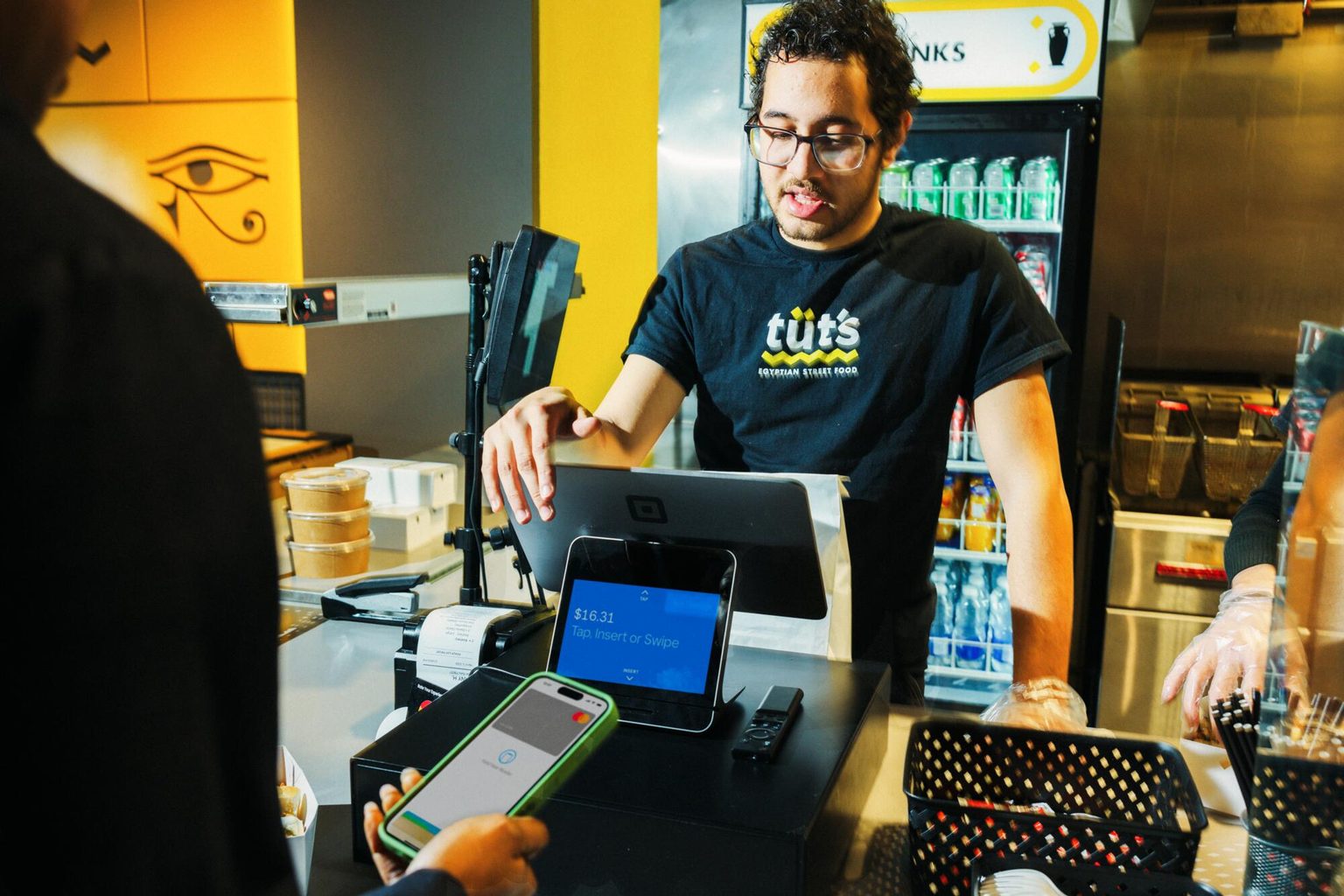
One critical factor operators often overlook: technology adoption is only effective when staff actually use it. Square's design philosophy prioritizes usability—hardware that feels familiar, software with immediately actionable dashboards rather than complex reporting. This accessibility is not a nice-to-have for restaurant operators managing high-turnover kitchen and front-of-house teams. It's essential.
When POS systems are intuitive, training time drops. Errors decrease. Adoption accelerates. For operators managing tight labor markets and high turnover, this difference in usability translates directly to faster service, fewer mistakes, and faster data collection. Complex systems create friction. Simple systems enable speed.
Equally important: integrated platforms eliminate the need to purchase and maintain multiple vendor relationships. Instead of juggling separate POS, inventory, payroll, and marketing systems, operators work with a unified platform where data flows seamlessly. This reduces IT overhead, simplifies troubleshooting, and ensures that systems actually talk to each other—no manual data entry, no reconciliation errors, no information gaps.
Intelligence at Scale: AI and Predictive Analytics
As platforms mature, artificial intelligence integration is shifting operators from reactive to predictive management. Real-time data on local trends, customer behavior, and external factors enables more informed decisions about staffing, inventory, and menu mix. Instead of planning inventory based on last year's numbers or intuition, operators can leverage actual demand patterns and seasonal variations.
For multi-location operators, this predictive capability becomes a competitive advantage. Which items drive higher margins? Which hours require increased staffing? Where is demand shifting? These insights enable operators to optimize food costs, control labor expense, and respond faster to market changes. For independents operating on thin margins, this intelligence bridges the gap between small and enterprise-scale operations.
The Operating System Advantage
The key distinction between point-of-sale systems and integrated commerce platforms is this: POS systems record transactions. Integrated platforms operate as the nervous system of the business. They connect front-of-house to back-of-house, inventory to ordering, sales to labor, customer data to menu strategy.
Industry competitors now compete on integrated capability, not just transaction processing. Operators evaluating technology partners should assess: Does this system unify channels? Does it provide real-time inventory visibility? Does it connect labor scheduling to demand? Does it enable data-driven menu and promotional decisions? Can it scale across locations without fragmentation?
For independent operators and emerging brands, this democratization of sophisticated technology matters significantly. Traditional enterprise systems required large upfront investment, long-term contracts, and technical expertise. Modern platforms eliminate those barriers, enabling smaller operators to compete on operational sophistication. That levels the playing field in meaningful ways.
The future of restaurant operations belongs to businesses equipped with systems as dynamic as the environments they operate in. Operators who unify technology, simplify complexity, and use integrated data to drive decisions will operate more profitably, scale more efficiently, and adapt faster to market changes. For an industry navigating constant labor, cost, and consumer challenges, this infrastructure distinction is critical—it's what separates operators who react to change from those who anticipate it.