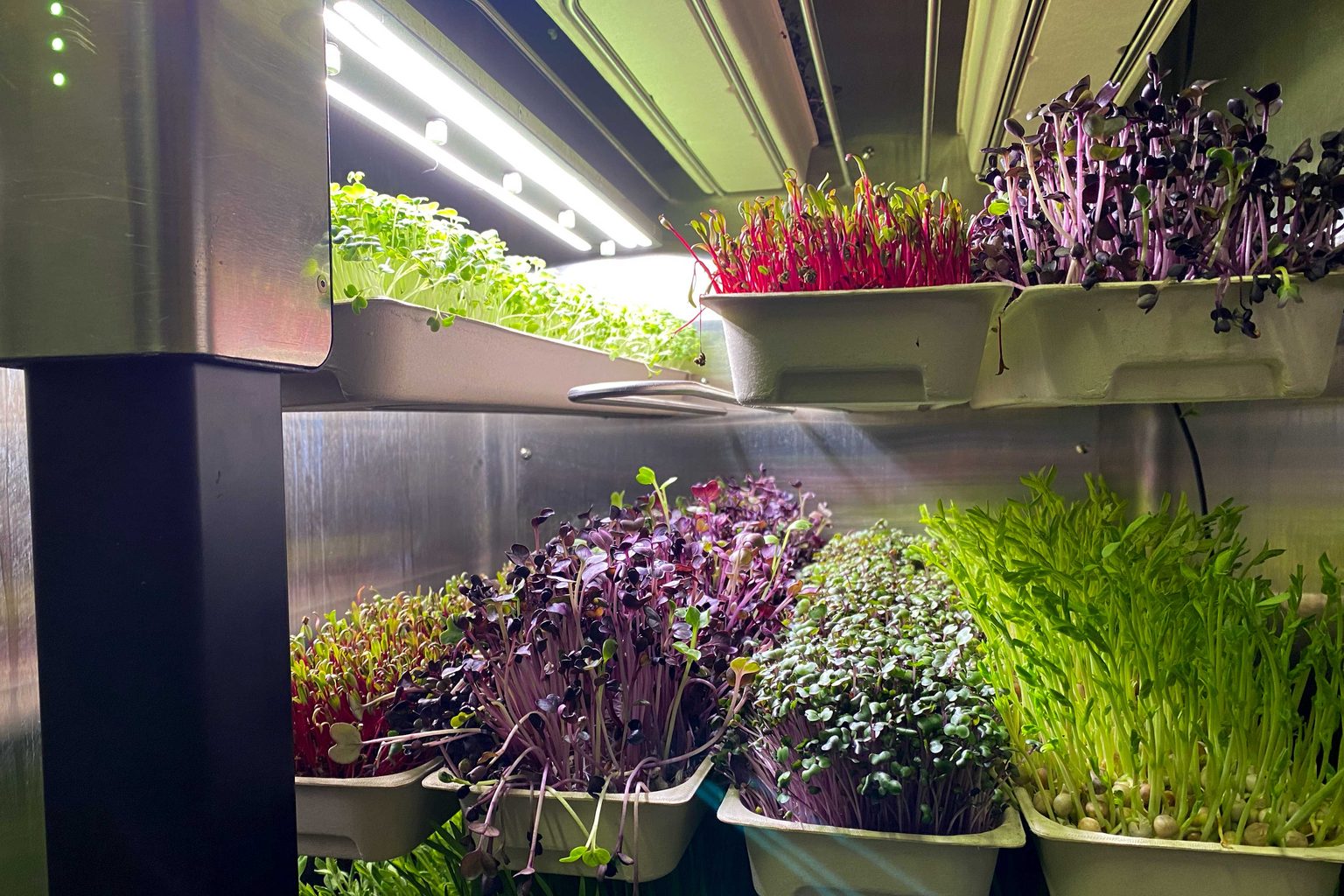
Operators face a relentless squeeze: rising ingredient costs, supply chain disruptions, transportation expenses, and labor shortages are forcing kitchens to rethink how they source. At the same time, guests demand freshness, consistency, and transparency about where their food comes from. One emerging solution eliminates the middleman entirely—growing microgreens and fresh herbs directly on-site, harvested moments before service.
Instafarm, a Colorado-based food technology company, has developed an automated growing system that brings commercial-scale production into restaurants, hotels, resorts, corporate dining, and healthcare kitchens. The system combines soil-based growing with intelligent lighting, automated watering, environmental monitoring, and pre-seeded trays—removing the expertise and constant labor traditionally required to grow quality greens in-house. The result: fresh, nutrient-dense ingredients on demand with minimal operational overhead.
Immediate Kitchen Benefits: Freshness, Waste Reduction, and ROI
For menu decision-makers, the operational case is clear. Rather than relying on outside suppliers for delicate herbs and microgreens, chefs can harvest ingredients at peak freshness moments before they hit the plate. That eliminates transportation time, reduces waste, increases consistency batch-to-batch, and creates a tangible story for guests—something increasingly expected in hospitality and fine dining.
The financial angle matters equally. On-site production shortens the supply chain for a category of ingredients that is expensive, fragile, and often subject to spoilage. No more paying premium prices for greens that lose quality during transit. No more food waste from suppliers shipping excess. For restaurants, wellness facilities, and resort kitchens already competing on freshness and sustainability, that margin improvement translates directly to the bottom line.
Instafarm's Commercial Unit was recognized as a CES 2026 Innovation Awards Honoree in the Food Tech category, and earned a 2026 Kitchen Innovations Award—a distinction widely regarded within foodservice as a benchmark for practical innovation and operational value. The recognition reflects what operators are already discovering: this is not experimental technology. It is actionable infrastructure.
How It Works in Your Kitchen
Instafarm's soil-based approach distinguishes it from hydroponic competitors. Soil grows consistent results and requires no specialized agricultural knowledge—important for kitchen staff who have no farming background. The system handles the technical work: automated lighting schedules, water management, and environmental monitoring happen behind the scenes. A mobile app lets operators monitor growing cycles, adjust settings, and schedule harvests remotely, ensuring greens are ready when the kitchen needs them.
This simplicity is intentional. The goal is not automation for its own sake—it is removing friction from a process that has historically demanded expertise and constant attention. Chefs focus on menu applications. The technology handles the growing.
Why Microgreens and Fresh Herbs Matter Now
Microgreens have moved far beyond fine-dining garnish. Chefs are building them into wellness programs, sports nutrition menus, everyday plates, and signature dishes because of their concentrated nutrient profiles and versatility. As operators compete on health-conscious positioning and functional food, the ability to reliably produce fresh greens on-site becomes a strategic asset—not a luxury add-on.
The broader industry shift is accelerating this opportunity. Concepts like hyper-local sourcing and farm-to-table positioning are no longer niche differentiators; they are guest expectations. Yet sourcing locally remains difficult and often uneconomical, particularly in regions with limited agriculture or seasonal constraints. On-site growing solves that. For a resort or corporate dining operation, it creates a visible, tangible demonstration of freshness. For a restaurant, it means zero compromises on ingredient quality or availability.
Redefining Local for Your Operation
The definition of local sourcing is evolving. It no longer means only partnering with nearby farms. Increasingly, for progressive operators, it means growing ingredients within the same building where they are served. That is not a distant vision—it is a working operational strategy available today.
As operators continue searching for ways to improve freshness, reduce waste, lower ingredient costs, and strengthen their positioning around sustainability, on-site growing systems offer a practical answer. The farm has moved into the kitchen. The question now is whether you are ready to harvest the competitive advantage.