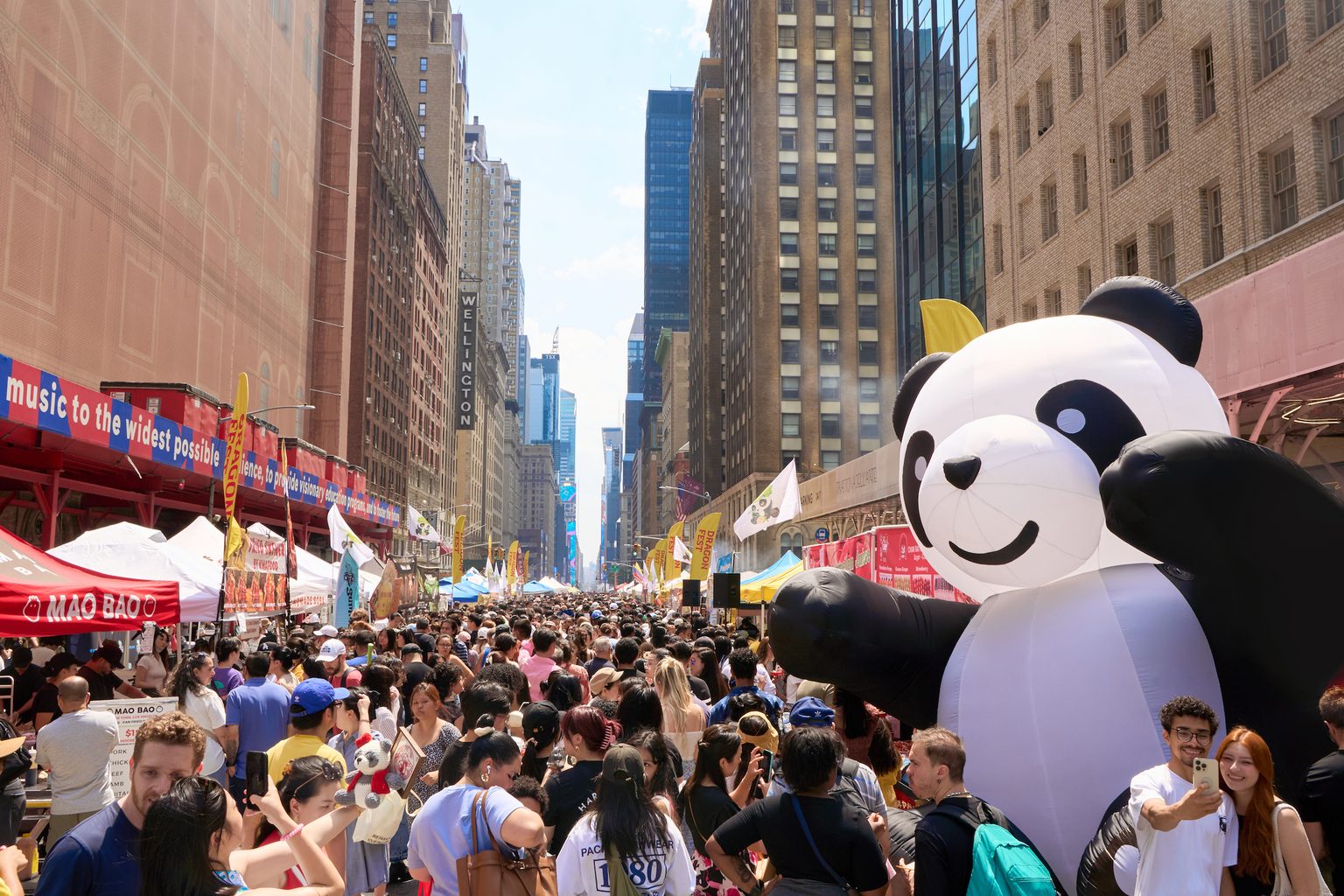
For restaurant operators and menu decision-makers, festivals have become high-yield customer acquisition channels. Panda Fest, launched in 2024, has grown into one of the nation's fastest-growing Asian food platforms, welcoming more than half a million attendees during its first year alone and expanding across multiple markets. For participating vendors, the ROI is clear: exposure to thousands of potential repeat customers, direct engagement with guests, and operational insights that drive long-term business growth.
What makes Panda Fest valuable to kitchen operators differs fundamentally from traditional marketing. Rather than passive advertising, vendors interact directly with consumers, demonstrate dishes in real-time, and gather immediate feedback on menu concepts. For chefs and small business owners, that direct-to-consumer data informs menu development, helps identify signature dishes with broader appeal, and reveals which cultural narratives resonate most strongly with target demographics.
Vendor Selection and Operational Guidance
Panda Fest's approach to vendor recruitment directly supports operator success. Founder BiuBiu recognizes that many participating businesses are family-owned, immigrant-owned, or first-generation operations scaling for the first time. According to BiuBiu, support extends well beyond booth placement to include operational guidance, production planning, and strategies for communicating unfamiliar dishes to broader audiences. This approach ensures vendors are equipped to handle high-volume service—a critical skillset for operators seeking to expand capacity or test new concepts.
The festival emphasizes authenticity-driven vendor selection rather than chasing viral trends. While familiar favorites such as soup dumplings, soufflé pancakes, tanghulu, and shaved ice generate social media momentum, the actual vendor mix prioritizes dishes reflecting authentic cultural traditions and individual chef backgrounds. For menu decision-makers, this strategy offers a proven framework: consumers reward depth and cultural storytelling over novelty alone. Operators who present recipes connected to genuine tradition and personal heritage build stronger customer loyalty than those relying solely on trending formats.
Data-Driven Operations and Menu Testing
Executing events across multiple cities requires operational rigor comparable to large hospitality organizations. Panda Fest adapts each market's event layout, vendor mix, and programming based on direct feedback collected after every festival. That iterative approach—treating each event as a menu-testing ground—reveals which concepts perform in specific markets, how crowd flow impacts sales, and what operational adjustments maximize vendor revenue.
The company's localized digital strategy also delivers kitchen-relevant insights. Rather than broad national campaigns, Panda Fest develops community-specific content, partners with local creators, and highlights participating vendors before ticket sales launch. For operators, this model demonstrates how targeted digital positioning drives foot traffic and guest awareness more effectively than traditional advertising. Chefs can apply similar strategies to their own menus, building anticipation through creator partnerships and storytelling before launching new dishes or concepts.
Revenue Growth and Repeat Customer Acquisition
Numerous participating vendors have reported significant business expansion following festival participation. The exposure directly translates to new customer acquisition, expanded distribution, and sustained momentum beyond the event weekend itself. For many small operators, a single festival appearance can establish enough brand awareness and customer relationships to support year-round growth.
Panda Fest's expansion strategy reinforces this opportunity. The organization is announcing additional markets across the United States while exploring year-round engagement through merchandise, creative collaborations, and expanded platforms for AAPI-owned culinary businesses. For restaurant operators, this signals a sustained consumer appetite for curated cultural food experiences—and growing demand for chefs and menus that deliver authenticity with quality execution.
From an operator perspective, Panda Fest demonstrates that memorable guest experiences drive repeat business and word-of-mouth growth. Environments that feel welcoming, narratives that feel genuine, and programming that encourages exploration create return visits and expanded check averages. The meal brings guests through the door, but authenticity, thoughtful menu positioning, and meaningful interaction are what inspire loyalty and higher customer lifetime value.
As experiential hospitality expands, festivals like Panda Fest reveal where guest expectations are heading. Consumers increasingly seek experiences celebrating cultural depth rather than showcasing isolated products. Operators who understand this shift—building menus and concepts around genuine storytelling, operational excellence, and guest engagement—position themselves to capture growing market demand. When those elements align intentionally, the business impact extends far beyond a single event.