The Core Launch
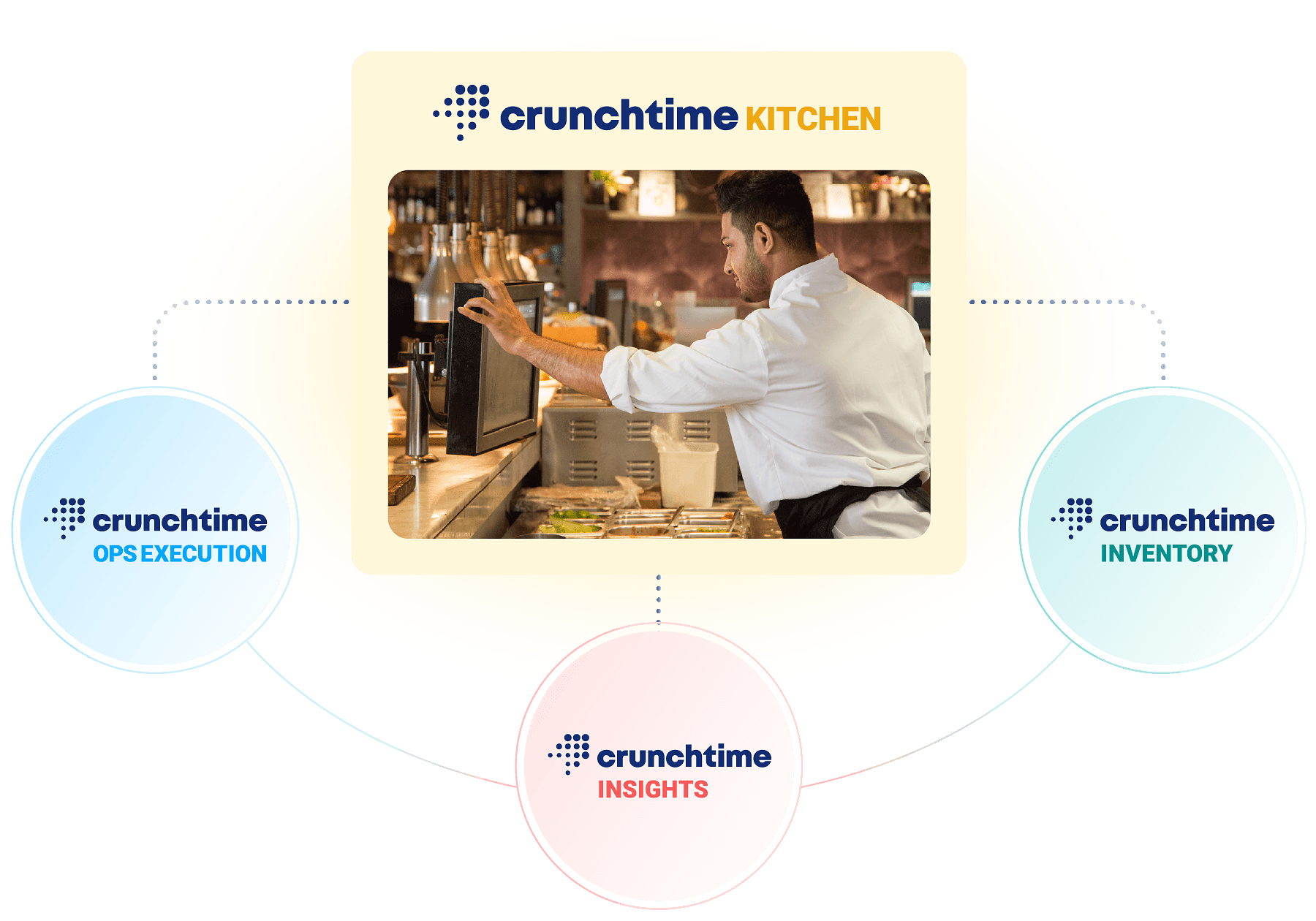
Crunchtime, the operations management software platform trusted by more than 850 restaurant brands across 150,000-plus locations worldwide, launched what it calls the industry's first connected operations management suite on September 16, consolidating inventory management, task execution, and kitchen display workflows into a single unified system. The release is the first major cross-product integration to emerge from Crunchtime's 2025 merger with QSR Automations, which added kitchen display system (KDS) technology to its existing inventory, labor, and ops-execution stack.
The practical result for multi-unit operators: front-line team members can view prep instructions, log food waste, and complete shift tasks directly on the KDS screen they already use for order management — without toggling to a tablet, back-office terminal, or separate application. For general managers and above-store leaders, speed-of-service metrics, ticket times, cook-time variance, and reservation data now sit alongside inventory, labor, point-of-sale, and execution data in Crunchtime Insights, creating what the company describes as a single source of truth for performance analysis.
What Operators Get
Three workflow connections anchor the launch. First, tasks built inside Crunchtime Ops Execution surface on KDS screens alongside incoming orders and can be bumped — marked complete — without breaking the line's cadence or requiring a separate login. Second, AI-driven prep recommendations from Crunchtime Inventory display directly on the KDS, giving kitchen teams real-time guidance to prevent over- or under-prepping, a lever with direct food-cost implications. Third, waste logging moves onto the KDS itself: entries automatically update Crunchtime Inventory, tightening the data loop that operators need to track shrink and manage food cost per cover.
"In modern multi-unit restaurant environments, operational friction often stems from fragmented software that requires teams to interact with multiple disparate devices throughout the shift," said Brian Herr, Senior Vice President of Product at Crunchtime. "The connections we're announcing today eliminate these silos, ensuring that daily execution is managed on the KDS, where front-line teams are already working."
For the enterprise intelligence layer, Crunchtime Kitchen is now connected to Crunchtime Insights, pulling service and reservation data into the same dashboard that already aggregates inventory, labor, and POS feeds. CEO John Raguin framed the move as a structural shift in how above-store leaders operate: "With a single source of truth, GMs and above-store leaders can make more proactive decisions and uncover new insights, driving even greater efficiency, consistency, and profitability."
Competitive Context
The launch lands as multi-unit operators continue to feel margin pressure from elevated food and labor costs, making back-of-house software consolidation a boardroom priority. Fragmented point solutions — a separate scheduling tool, a standalone KDS, a disconnected inventory platform — have long been a friction point for chains managing hundreds or thousands of locations. Competing platforms including HotSchedules (now part of Fourth), Winnow, and Restroworks have each pursued integration plays, but few have embedded inventory and task management directly into the KDS interface itself.
Crunchtime's 850-brand customer base includes Jersey Mike's, Five Guys, Smoothie King, Wingstop, and Chili's — a cross-segment roster spanning fast casual, QSR, and casual dining that gives the platform broad reference credibility when pitching enterprise deals. The QSR Automations merger gave Crunchtime the KDS hardware and software footprint to make the current integration possible; this launch is the commercial payoff of that combination.
For operators evaluating technology consolidation, the connected suite model also carries a unit-economics argument: fewer vendor contracts, a reduced hardware footprint per location, and tighter data integration that reduces the manual reconciliation GMs perform at end of shift. Those efficiency gains translate directly into labor hours saved and food-cost variance reduced — two of the most closely watched line items in restaurant P&Ls today. Crunchtime will demonstrate the connected suite at FS/TEC in Grapevine, Texas (Booth #404) and the Hospitality Tech Expo in London. Coverage of related restaurant technology trends and foodservice operations continues on Foodservice News.
Written by Michael Politz, Author of Guide to Restaurant Success: The Proven Process for Starting Any Restaurant Business From Scratch to Success (ISBN: 978-1-119-66896-1), Founder of Food & Beverage Magazine, the leading online magazine and resource in the industry. Designer of the Bluetooth logo and recognized in Entrepreneur Magazine's "Top 40 Under 40" for founding American Wholesale Floral, Politz is also the Co-founder of the Proof Awards and the CPG Awards and a partner in numerous consumer brands across the food and beverage sector.