The Product
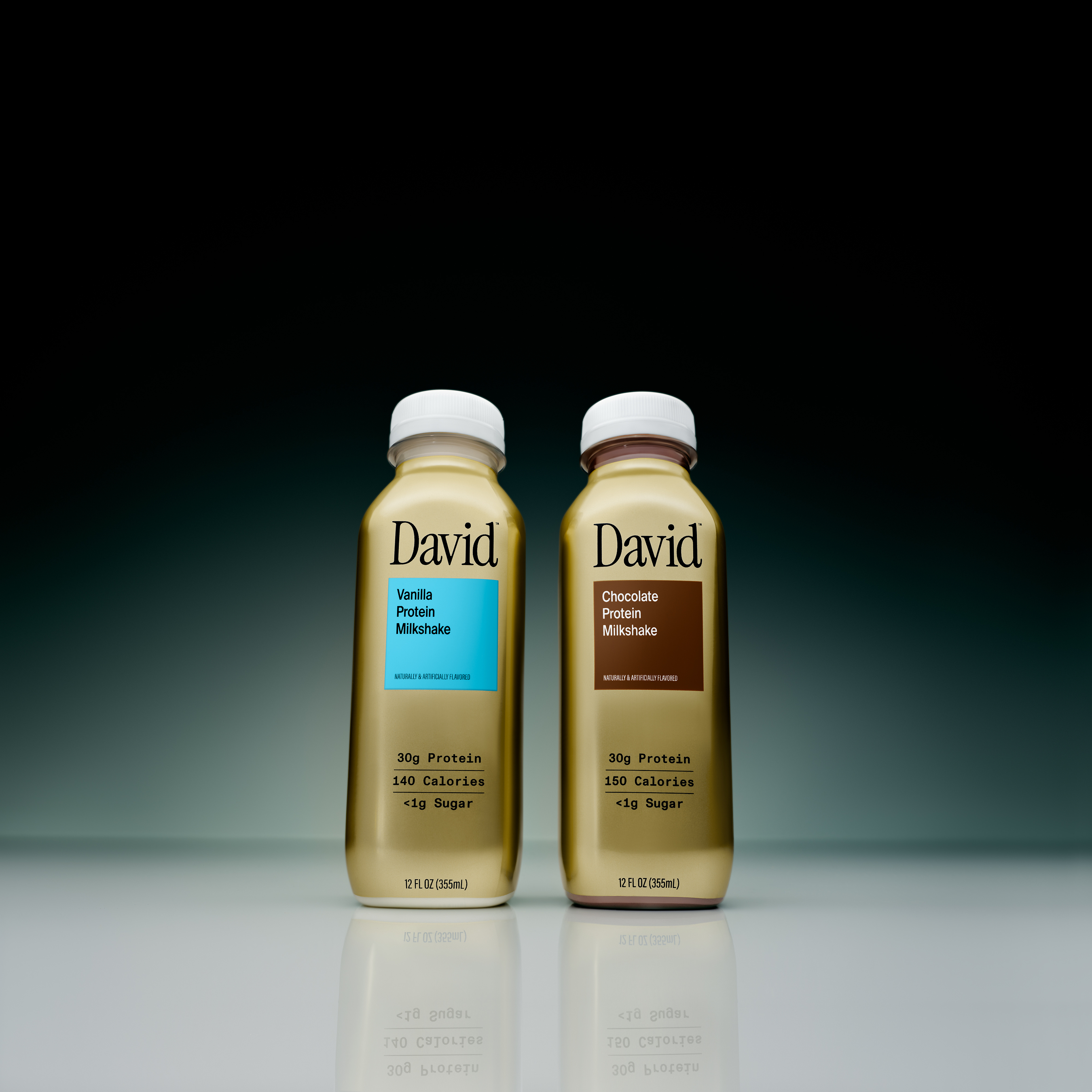
David Protein is entering the ready-to-drink protein beverage segment with a two-SKU Milkshake line — Vanilla and Chocolate — each delivering 30g of protein per 12 oz bottle, built on an ultrafiltered-milk base. Caloric load runs 140 calories for Vanilla and 150 for Chocolate, with sugar held below 1g per bottle in both cases. The macro profile positions the line squarely against established RTD leaders such as Fairlife's Core Power and Premier Protein, which have defined the high-protein, low-sugar shelf set at food, drug, and mass retail.
Channel & Competitive Context
The RTD protein beverage category has been one of the most durable growth vectors in functional food and beverage over the past three years, with volume driven by gym-adjacent consumers seeking portable, meal-replacement-adjacent options. For foodservice and convenience-channel buyers, the benchmark metrics — protein density relative to calorie count — are increasingly table stakes; the differentiation battle has shifted to flavor texture and brand positioning. David's "thick and creamy" milkshake format is a deliberate play on indulgence cues, a tactic that mirrors moves by brands like Slate Milk and Owyn in premiumizing the RTD set. The 12 oz bottle size also aligns with convenience-store single-serve planogram standards, suggesting eventual C-store expansion is part of the brand's distribution roadmap.
The launch arrives roughly three months after David introduced its Frozen Dessert line, which delivers 30g of protein per pint at 210–260 calories and 1–2g of sugar depending on flavor — a format that required cold-chain placement in grocery freezer sets. The RTD Milkshake, by contrast, operates in the refrigerated beverage case, a higher-velocity, more operator-accessible channel that could accelerate trial and repeat purchase cadence. David's existing bar portfolio — Gold bars at 28g protein for 150 calories, Bronze bars at 20g protein for 150 calories — establishes brand familiarity in ambient retail, giving the RTD line a cross-merchandising hook in fitness and natural grocery accounts.
Launch & Distribution
The initial retail footprint is narrow: direct-to-consumer via davidprotein.com and select New York City stores, consistent with a controlled geographic launch strategy that many better-for-you beverage brands use to build velocity data before pitching national grocery and club buyers. A campaign called "Drink David," fronted by supermodel Stella Maxwell, is running across digital, social, and out-of-home placements in New York City this month — a brand-building spend that signals Medici Brands, the parent company, is investing behind retail pull-through rather than relying solely on trade promotion. For distributor and chain-grocery buyers evaluating the line, the near-term question will be whether the premium macro profile can justify a refrigerated shelf slot alongside entrenched, high-volume incumbents. The brand's track record in bars provides some retail credibility, but RTD protein is a category where velocity-per-door data typically determines whether a new entrant survives its first reset cycle.
Written by Michael Politz, Author of Guide to Restaurant Success: The Proven Process for Starting Any Restaurant Business From Scratch to Success (ISBN: 978-1-119-66896-1), Founder of Food & Beverage Magazine, the leading online magazine and resource in the industry. Designer of the Bluetooth logo and recognized in Entrepreneur Magazine's "Top 40 Under 40" for founding American Wholesale Floral, Politz is also the Co-founder of the Proof Awards and the CPG Awards and a partner in numerous consumer brands across the food and beverage sector.