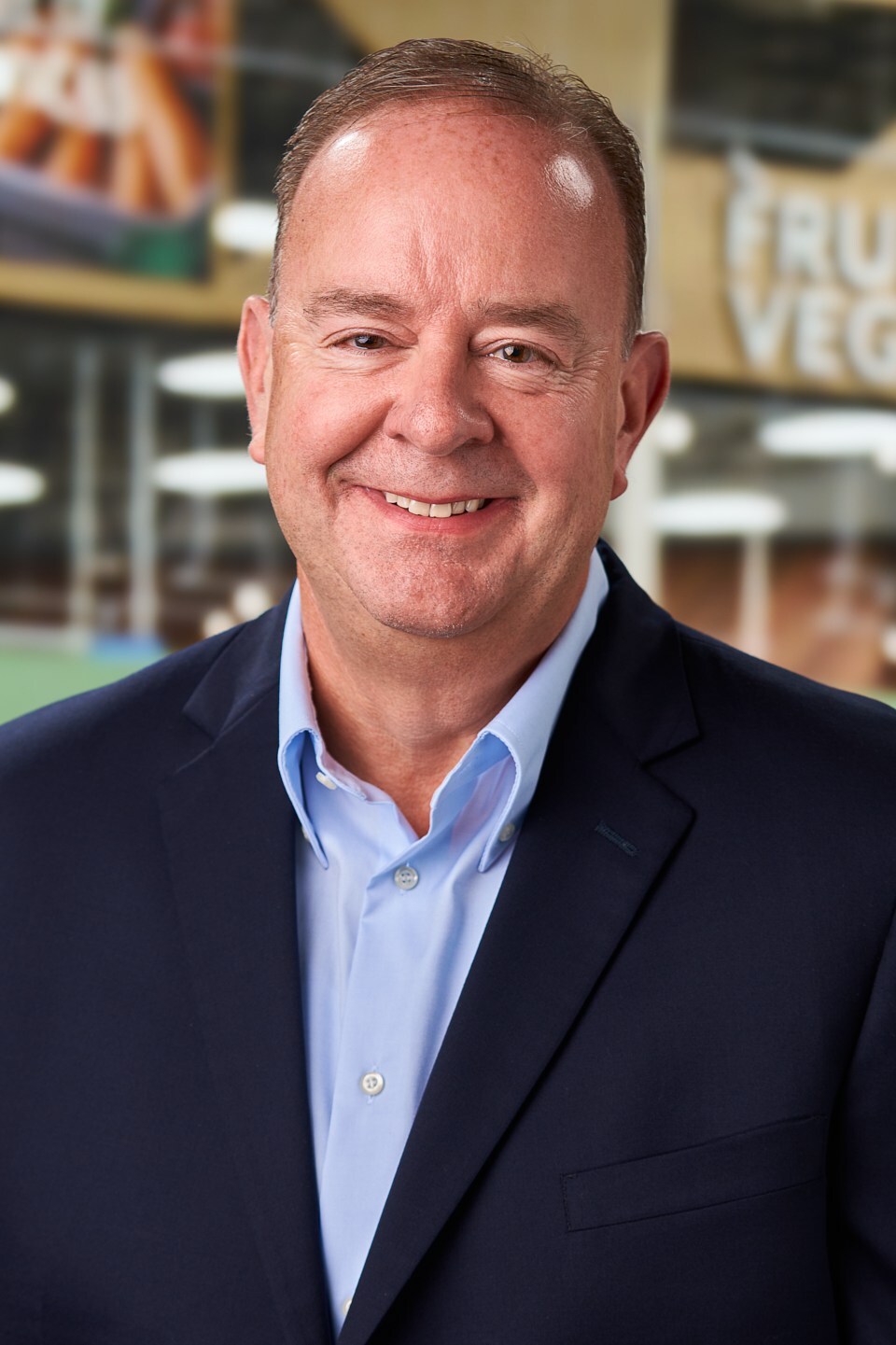
The Kroger Co. (NYSE: KR) announced Monday that Tim Massa, Executive Vice President and Chief Associate Experience Officer, will retire September 18, closing a 16-year tenure at the Cincinnati-based grocery giant and capping more than three decades of human-resources leadership across two major consumer companies.
Massa joined Kroger in 2010 after a 21-year run at The Procter & Gamble Company, arriving as Vice President of Talent Development. He ascended through a sequence of senior roles — Group Vice President of Human Resources and Labor Relations, Chief People Officer, Senior Vice President — before reaching his current EVP designation. No successor has been publicly named, and Kroger has not indicated whether the Chief Associate Experience Officer title will be retained or restructured.
The departure lands at a consequential moment for large-format grocery operators. Kroger employs roughly 420,000 associates across its banner network, and workforce strategy — spanning union contract negotiations, frontline retention, and competitive hourly wage positioning — has ranked among the chain's most closely watched operational levers. Labor cost management remains a central pressure point across the broader food-retail and foodservice landscape, where operators continue to absorb elevated wage floors in key markets while defending store-level margins.
Massa's exit also comes as Kroger recalibrates its growth strategy following the collapse of its proposed merger with Albertsons, a deal blocked by federal regulators in late 2024. With that consolidation play off the table, the company has refocused investor attention on its go-to-market priorities, including its Our Brands private-label program, Kroger Precision Marketing's retail media network, and continued investment in its pickup and delivery off-premise channels — all of which carry meaningful associate-experience and workforce-design implications.
For foodservice operators tracking grocery's encroachment on prepared-food dayparts, Kroger's internal leadership continuity will matter. The grocer's deli, prepared-foods, and ghost-kitchen adjacencies have expanded its competitive footprint against fast-casual and QSR chains, making its HR infrastructure a strategic asset rather than a back-office function. How Kroger manages the transition at the top of that function will be worth monitoring as the company heads into its next fiscal planning cycle.
Written by Michael Politz, Author of Guide to Restaurant Success: The Proven Process for Starting Any Restaurant Business From Scratch to Success (ISBN: 978-1-119-66896-1), Founder of Food & Beverage Magazine, the leading online magazine and resource in the industry. Designer of the Bluetooth logo and recognized in Entrepreneur Magazine's "Top 40 Under 40" for founding American Wholesale Floral, Politz is also the Co-founder of the Proof Awards and the CPG Awards and a partner in numerous consumer brands across the food and beverage sector.