The Channel Play
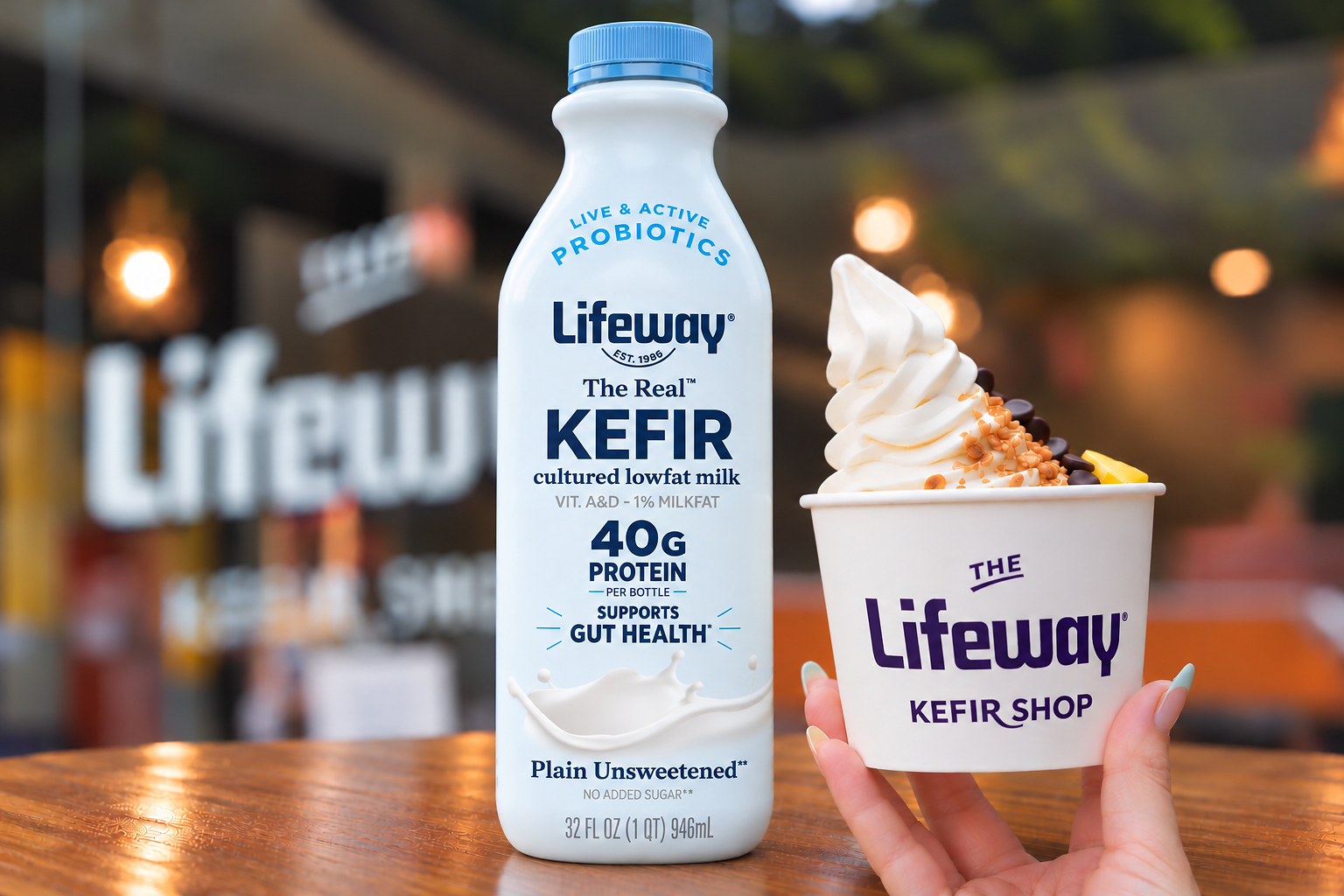
Lifeway Foods (Nasdaq: LWAY) is pushing its kefir back into commercial soft-serve machines, striking supply agreements with frozen yogurt operators in New York, Chicago, Los Angeles, and additional markets as it rebuilds a foodservice footprint it surrendered during the pandemic. The Morton Grove, Ill.-based company — the dominant U.S. kefir supplier — is positioning the move as a premium-ingredient play against the powdered frozen yogurt mixes that underpin most froyo concepts.
The soft serve is already live at a handful of trend-forward froyo destinations, including Drugstore, Mikono, and Culture Club. Lifeway says it is actively working with additional shops and foodservice concepts interested in adding the product to their soft-serve equipment rotation, suggesting a channel-development rather than a co-branded retail strategy.
What Operators Get
The product differentiation centers on ingredient authenticity and functional nutrition. Unlike conventional frozen yogurt bases reconstituted from powder, Lifeway's formulation uses real kefir, delivering the brand's characteristic tart-tangy flavor profile alongside 50 billion CFUs of live and active cultures and high-bioavailability protein per serving. That nutrient density also positions the item for emerging GLP-1 medication users seeking protein-forward, lower-guilt options — a daypart and demographic that several better-for-you QSR and fast-casual operators have begun marketing toward explicitly.
"Many frozen yogurt mixes start as a powder. Ours starts with real kefir, bringing its signature tart, tangy flavor, high-quality bioavailable protein and 50 billion CFUs to the soft-serve machine," said Julie Smolyansky, President and CEO of Lifeway Foods. The company is targeting lactose-sensitive consumers as an additional incremental audience, citing kefir's fermentation process as a differentiating selling point for operators in health-conscious urban markets.
Background and Outlook
Lifeway has prior direct-to-consumer foodservice history in the frozen format. It opened Starfruit Café in Chicago in 2008 — later rebranded The Lifeway Kefir Shop — operating four brick-and-mortar locations and a food truck before the pandemic-era closure in 2021. The company has since staged intermittent pop-up activations to keep brand awareness in the channel. The current push shifts strategy from company-operated units to a B2B ingredient-supply model, which is lower-capital and scales through operator adoption rather than unit expansion.
For froyo operators, the program fits into a broader functional-beverage and better-for-you segment trend that has reshaped cold-treat menus over the past several years. Cultured dairy and probiotic positioning have moved from specialty-health into mainstream fast-casual, and operators in high-foot-traffic urban markets have shown willingness to absorb a modest ingredient premium when health credentials translate to menu pricing power. The frozen dessert and novelty daypart remains one of the few QSR-adjacent segments still adding concept diversity rather than consolidating.
Lifeway has not disclosed wholesale pricing, volume commitments, or royalty structures associated with the foodservice program. The company sells its retail kefir portfolio across the United States, Mexico, the UAE, Central America, and the Caribbean.
Written by Michael Politz, Author of Guide to Restaurant Success: The Proven Process for Starting Any Restaurant Business From Scratch to Success (ISBN: 978-1-119-66896-1), Founder of Food & Beverage Magazine, the leading online magazine and resource in the industry. Designer of the Bluetooth logo and recognized in Entrepreneur Magazine's "Top 40 Under 40" for founding American Wholesale Floral, Politz is also the Co-founder of the Proof Awards and the CPG Awards and a partner in numerous consumer brands across the food and beverage sector.