The Partnership
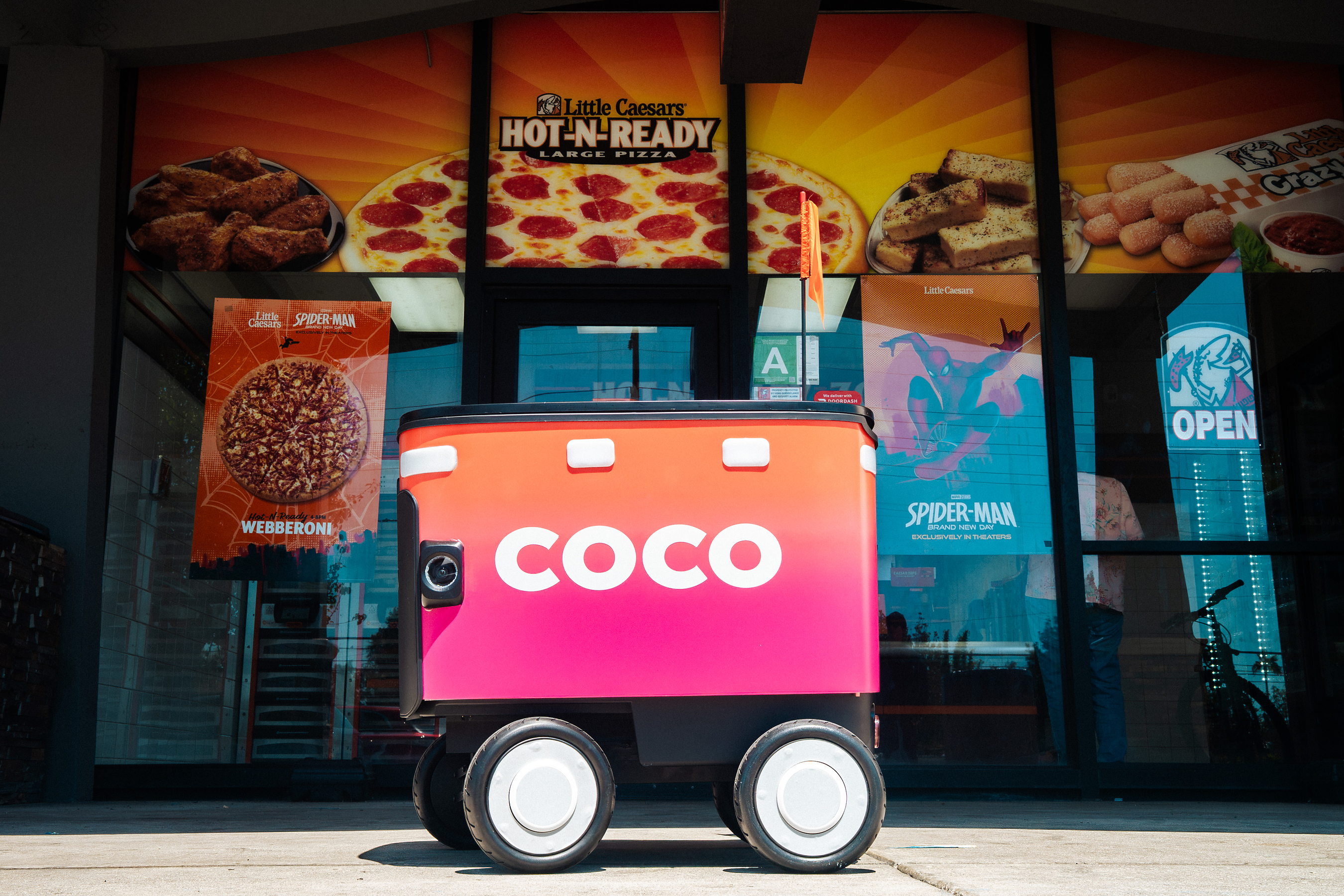
Little Caesars, the world's third-largest pizza chain, has activated autonomous sidewalk-robot delivery at participating locations in Los Angeles, Chicago, and Miami through a collaboration with Coco Robotics, with a San Jose expansion in the pipeline. The rollout represents one of the broader multi-market commitments a national QSR chain has made to robot-assisted last-mile delivery to date.
Orders placed through DoorDash and Uber Eats at participating units can be fulfilled by Coco's robots, which interface directly with both platforms' existing ordering systems. No manual entry or extra workflow is required of in-store teams — tickets flow from the kitchen to the curb, where a robot completes the final-mile leg to the customer's location. For a value-focused chain whose HOT-N-READY model is built on speed and minimal friction, the integration preserves that operating simplicity while extending it into the off-premise channel.
Operator Rationale
Trish Heusel, VP of Innovation at Little Caesars, framed the initiative as both a guest-experience and a throughput play. "By integrating Coco's autonomous robots, we can deliver hot, delicious pizza in record time to more customers," she said. "Automating deliveries also reduces congestion in our stores and helps get orders out faster during peak periods." That in-store congestion point is significant: Little Caesars' carry-out-heavy model — anchored by its Pizza Portal® self-service pickup kiosks — can see order stacking during dinner daypart rushes, and offloading delivery dispatch to a robot removes one variable from the equation.
For Coco, the deal is a marquee enterprise win. Melissa Fahs, VP, Enterprise at Coco Robotics, described the partnership as proof that autonomous delivery can operate "at scale" within an established franchise system. Coco has logged more than 500,000 zero-emission deliveries across the U.S. and Europe since its 2020 founding, and its fleet's AI platform learns continuously from real-world mileage — a data flywheel the company says enables rapid city-by-city expansion without proportional increases in operational overhead.
Competitive Context
The Little Caesars deal arrives as the broader QSR segment intensifies its search for off-premise efficiency tools that do not require headcount additions. Robot delivery programs have drawn growing operator interest as third-party delivery costs — including commission rates and driver-availability volatility — pressure already-thin unit economics. Sidewalk robots sidestep surge pricing and driver shortages that can erode delivery margin during peak dayparts, making them a meaningful hedge for high-volume, price-sensitive concepts like Little Caesars.
The pizza segment is particularly exposed to delivery economics: with average unit volumes skewed toward value price points and high ticket frequency, the math on third-party commissions compounds quickly. Autonomous fulfillment, integrated natively into existing aggregator platforms rather than requiring a parallel ordering stack, lowers the adoption barrier for franchisees. The collaboration has already earned two 2026 Franchise Innovation Awards — Innovator of the Year for Operations & Technology and Most Innovative Use of Technology — signals that the franchising community is watching the model closely.
San Jose marks Coco's most recent U.S. market expansion, and the company's ability to onboard Little Caesars units there quickly after launch underscores the scalability argument the brand is making to prospective restaurant technology partners. For Little Caesars, which operates in all 50 U.S. states and 31 countries and competes in a $150 billion global pizza market, even incremental delivery-speed improvements carry material guest-retention implications at scale.
Written by Michael Politz, Author of Guide to Restaurant Success: The Proven Process for Starting Any Restaurant Business From Scratch to Success (ISBN: 978-1-119-66896-1), Founder of Food & Beverage Magazine, the leading online magazine and resource in the industry. Designer of the Bluetooth logo and recognized in Entrepreneur Magazine's "Top 40 Under 40" for founding American Wholesale Floral, Politz is also the Co-founder of the Proof Awards and the CPG Awards and a partner in numerous consumer brands across the food and beverage sector.