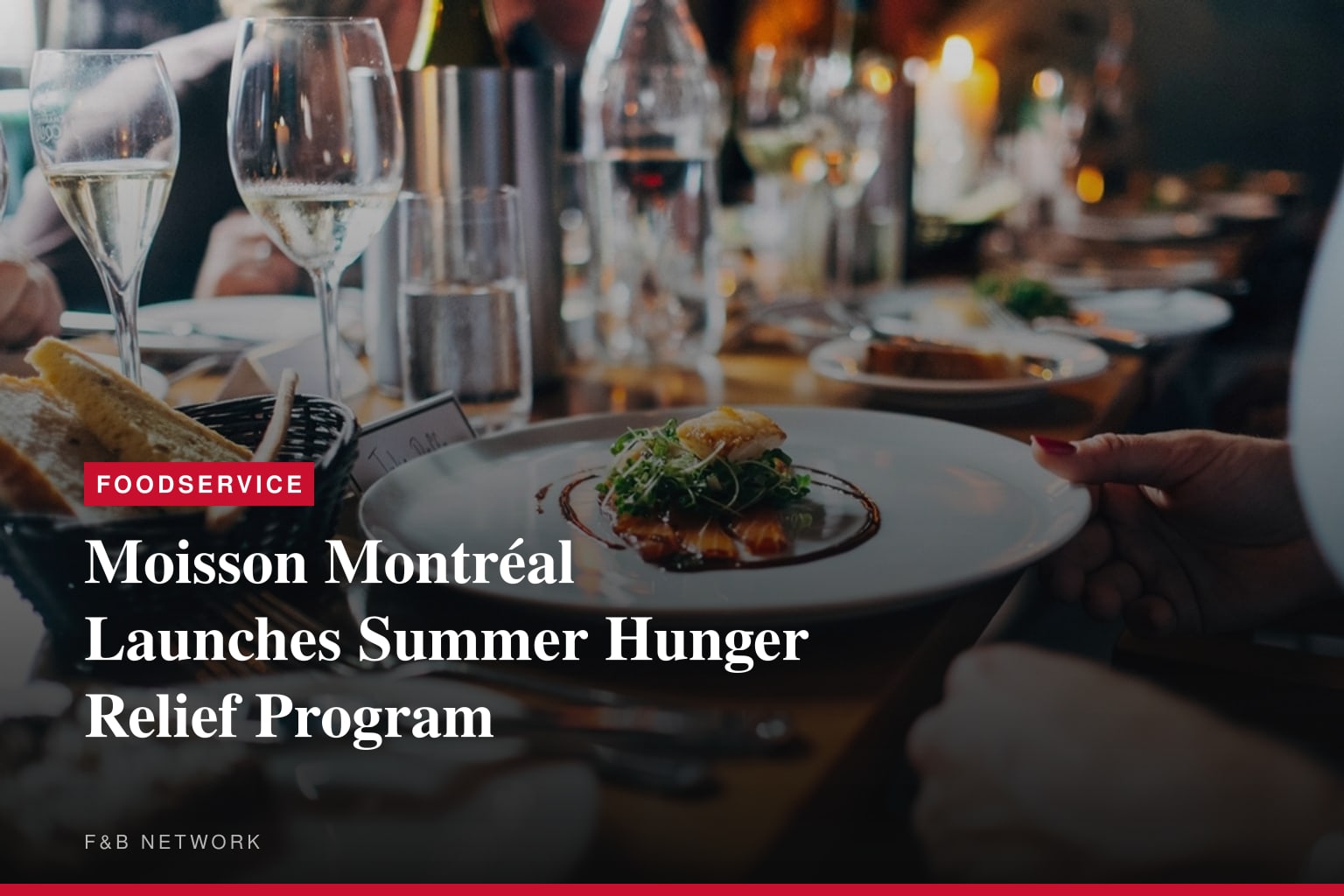
Moisson Montréal, the largest food bank in Canada by volume, has launched its annual Hungry for Vacation campaign, timed to the close of the academic year when school-based feeding programs — a critical institutional meal channel — go dark for roughly two months. The initiative mobilizes food-industry donors, retail partners, and foodservice operators to redirect surplus inventory and prepared meals toward vulnerable populations whose primary nutritional safety net disappears with the final school bell.
The program does not publish granular unit-economics data, but Moisson Montréal's broader operation annually redistributes more than 22 million kilograms of food across a network of roughly 300 affiliated community organizations in the Greater Montreal region. That scale places it firmly in the institutional foodservice tier — comparable in logistical complexity to a regional contract-feeding operation — and its seasonal volume spikes require meaningful supply-chain coordination with food manufacturers, distributors, and prepared-food donors.
The summer hunger gap is a recognized pressure point across North American food-relief infrastructure. When K–12 cafeteria programs cease operations, children who depend on subsidized breakfast and lunch dayparts lose up to 10 meals per week. Food banks and community meal programs that partner with foodservice operators typically absorb the overflow demand, stressing both warehouse capacity and last-mile distribution networks that were not sized for peak-summer throughput.
For commercial foodservice operators and manufacturers, campaigns like Hungry for Vacation represent a structured off-take channel for surplus product — a mechanism that intersects with food-waste reduction targets increasingly embedded in ESG reporting. Prepared-food donations from restaurant and commissary kitchens, when properly logged, also carry tax treatment advantages under Canadian federal guidelines, a point Moisson Montréal uses in its trade-partner outreach.
The organization has not disclosed specific fundraising or tonnage targets for the 2026 Hungry for Vacation cycle, but prior campaigns have run through August, bridging the gap until institutional meal programs resume in September. Industry and donor engagement details are available directly through Moisson Montréal's partner portal. Coverage of related food-waste and sustainability initiatives in the foodservice channel and institutional and non-commercial feeding segment trends continues across the Foodservice News network, published through the Food & Beverage Magazine network.
Written by Michael Politz, Author of Guide to Restaurant Success: The Proven Process for Starting Any Restaurant Business From Scratch to Success (ISBN: 978-1-119-66896-1), Founder of Food & Beverage Magazine, the leading online magazine and resource in the industry. Designer of the Bluetooth logo and recognized in Entrepreneur Magazine's "Top 40 Under 40" for founding American Wholesale Floral, Politz is also the Co-founder of the Proof Awards and the CPG Awards and a partner in numerous consumer brands across the food and beverage sector.