The LTO Lineup
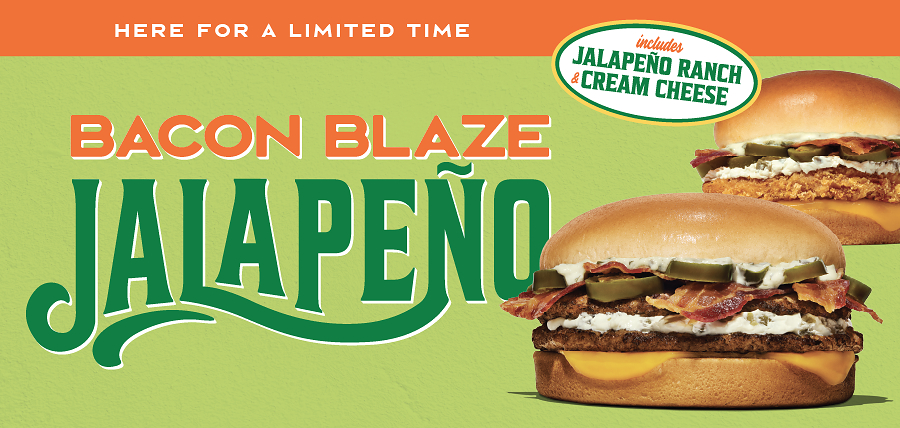
Whataburger is activating four limited-time offerings simultaneously across its 1,200-plus unit system, layering spicy burger builds alongside two seasonal beverage items in what amounts to a dual-daypart play for the San Antonio-based QSR chain. The drop, effective Oct. 20, adds the new Bacon Blaze Chicken alongside the returning Bacon Blaze Jalapeño Double, while introducing the Sleigh Berry Whatafresher and White Chocolate Raspberry Shake on the beverage side.
Price points span $3.69 for the Sleigh Berry Whatafresher to $9.99 for the Bacon Blaze Jalapeño Double, with the Jr. Bacon Blaze Jalapeño Double and Bacon Blaze Chicken both entering at $7.99. The shake starts at $3.99. All prices vary by location. The Jr. size option on the Jalapeño Double expands the entry-level price tier — a move that helps protect check average while broadening transaction accessibility in a value-sensitive environment.
Menu Architecture
The Bacon Blaze Jalapeño Double features two fresh, 100% beef patties with jalapeño ranch, jalapeño cream cheese, smoky bacon, sliced jalapeños, and aged cheddar on what Whataburger frames as a heat-forward but flavor-balanced build. The new Bacon Blaze Chicken ports the same flavor profile onto premium chicken — grilled or crispy Whatachick'n — on a toasted potato bun, extending the LTO's reach across two protein platforms. On the beverage side, the Sleigh Berry Whatafresher combines cranberry, citrus, and soft whip, while the White Chocolate Raspberry Shake targets the dessert daypart with a cheesecake-adjacent flavor proposition.
"Guests are looking for more variety from restaurant menus — from bold, spicy flavors to beverages that feel fresh and seasonal," said James Sanchez, Whataburger Corporate Chef. "This lineup lets us deliver both: bringing back a flavor Guests have already told us they love while introducing new choices that feel right for the season."
Competitive Context
Whataburger's simultaneous spicy-and-sweet LTO strategy aligns with a broader QSR pattern of deploying flavor-driven limited-time items to defend traffic heading into Q4, when holiday daypart competition intensifies across quick-service and fast-casual. Running four SKUs concurrently — rather than staggering releases — concentrates marketing spend and simplifies crew training, though it also raises complexity on the unit operations side during a period when labor costs remain elevated across the foodservice industry.
The chain's 1,200-unit scale across 17 states gives it enough regional density to test beverage-platform extensions like the Whatafresher line against its core burger traffic. Drive-thru remains the primary order channel at Whataburger, which operates 24/7, but the brand has been building digital order volume through its app — which offers a free burger to new account holders and a loyalty points program. Growing digital mix is a key lever for capturing beverage and add-on attachment rates that are harder to drive in traditional drive-thru queues.
For foodservice operators tracking LTO strategy and menu innovation, Whataburger's holiday push illustrates how regional QSR chains can use seasonal beverage builds to compete for share-of-stomach against both national burger chains and specialty beverage concepts, without requiring significant capital investment at the unit level.
Written by Michael Politz, Author of Guide to Restaurant Success: The Proven Process for Starting Any Restaurant Business From Scratch to Success (ISBN: 978-1-119-66896-1), Founder of Food & Beverage Magazine, the leading online magazine and resource in the industry. Designer of the Bluetooth logo and recognized in Entrepreneur Magazine's "Top 40 Under 40" for founding American Wholesale Floral, Politz is also the Co-founder of the Proof Awards and the CPG Awards and a partner in numerous consumer brands across the food and beverage sector.