Salvatore Ferragamo Jr. and Chef Andrea Campani of Il Borro reveal how vertical integration across vineyards, farms, and production facilities fundamentally reshapes menu strategy, cost management, and guest value perception — lessons directly applicable to multi-unit operators and independent restaurants building competitive supply chain advantages.
From Supply Chain Control to Menu Authority
The Non-Negotiable Menu Foundation
Il Borro operates on a principle that reverses traditional menu planning: rather than designing dishes first and sourcing second, the kitchen works exclusively with what the estate produces in real time. As Chef Andrea Campani explains, "We don't start from what we want to put on the menu but from what nature offers us at that specific moment."
This approach ensures that every item reflects peak seasonality and ingredient quality, but it demands kitchen staff with advanced technique and adaptability. "The technique is essential to transform every available ingredient into a dish capable of creating emotion," Campani notes. For operators, this means investing in culinary skill and staff training as a core operational cost — not a variable expense.
The Farm-To-Table Menu Cycle
The Farm-To-Table menu at Il Borro is "constantly renewed, only evolving with the seasons and the availability of the freshest ingredients." This approach ensures "each dish reflects the authenticity of Tuscany and highlights the quality of seasonal products at their peak."
For restaurant operators, implementing this model requires rethinking procurement timelines, menu printing, and staff communication protocols. Dishes may become unavailable on short notice; suppliers must be reliable but flexible. The kitchen must operate with structured improvisation — a significant operational shift from fixed-cost menu models.
Pricing Strategy: Why Vertical Integration Costs More, Not Less
Higher Costs, Higher Margins, Better Margins
A critical finding from Il Borro's experience: vertical control does not automatically reduce food costs. "Working with small producers, sustainable farms, and non-intensive agriculture often involves higher costs compared to industrial or large-scale systems," Campani states directly.
The difference is operational and perceptual. "Knowing exactly where every ingredient comes from and being able to personally guarantee its origin creates a very strong relationship of trust with the guest." This trust justifies premium pricing. Guests "recognize the value of making an ethical, safe, and healthy choice," which translates to check averages that support higher ingredient costs.
For operators, the ROI calculation shifts: the question is not "How do we reduce food cost percentage?" but rather "What premium can we command by owning the sourcing story?"
Culinary and Sourcing as Experience Design
Transparency as a Menu Asset
Il Borro offers "guests a rare transparency — from cheese production to truffle hunting." This direct connection to production becomes part of the dining narrative and justifies both menu positioning and price points.
At the bistro level, this principle translates simply: "When the experience is genuine, from the glass to the plate, it naturally connects with guests from different cultures." In practice, operators can communicate sourcing details on menus, train staff to discuss provenance, and design tasting experiences around estate or local-partner production.
Supply Chain as Competitive Moat
Direct contact with producers creates operational advantages beyond cost management. Campani emphasizes: "Direct contact with farmers, breeders, and producers allows us to better understand the rhythms of nature, the work in the fields, respect for animals, and the true seasonality of products. All of this enriches our awareness and is reflected in the experience we offer our guests."
This knowledge compounds over time. Staff develop ingredient relationships, understand quality variations, and can adapt menus with confidence rather than constraint. For multi-location operators, this suggests that local sourcing partnerships become a differentiator that corporate standardization cannot replicate.
Sustainability as Operational Reality, Not Marketing
Measurable Impact on Costs and Credibility
Il Borro's sustainability initiatives are grounded in quantifiable metrics: renewable energy production grew from eight photovoltaic systems in 2013 to eighteen today. "In 2024, we produced 2.4 GWh of renewable energy, avoiding 669 Tonnes of CO₂; in 2025, we pushed this even further, reaching 2.7 GWh."
For operators, the lesson is direct: sustainability claims must be measurable or they erode credibility. Salvatore Ferragamo Jr. emphasizes, "Sustainability, to be credible, must be measurable. And measuring well takes time and method." He adds: "We will not say it until the numbers support it because sustainability does not tolerate inconsistencies. That is the difference between those who tell the story and those who build it."
Il Borro's estate spans 1,200 hectares, of which around 520 are pristine woodland that "sequester CO₂, and shelter around 50 protected species." The company is currently mapping its full carbon footprint, including Scope 3 emissions, to establish baseline and targets.
For restaurant operators, this suggests that sustainability programs should begin with measurement and internal benchmarking before external communication. Guests "can tell the difference between something constructed and what is simply there," so consistency and transparency matter more than promotional claims.
Brand Identity and International Expansion Without Dilution
Non-Negotiable Standards as the Cost of Growth
As Il Borro expands internationally, particularly into the U.S., maintaining operational coherence becomes the central challenge. "The priority is not to adapt to trends, but to remain consistent with our identity. That means staying true to our Tuscan roots, to a certain way of doing things, from the ingredients we choose to the atmosphere we create."
For multi-unit operators building regional or national presence, this principle is critical: expansion requires systems and training that preserve kitchen execution, sourcing standards, and guest experience across locations. It is more expensive than standardized scaling but protects brand equity and repeat customer value.
Innovation That Strengthens, Not Replaces, Tradition
Il Borro's approach to innovation offers a framework: "Tradition and innovation not as opposites but together. If anything, innovation should empower tradition, not replace it. Tradition is the framework, how we grow, how we produce, how we host, the ingredients. Innovation comes in as a tool for precision, to refine and enhance what already exists."
A concrete example: vineyard pest management uses "a natural technique called sexual confusion to protect the vines, with small pheromone diffusers that disrupt the mating cycle of insects, reducing the need for intervention. It's a method with roots going back decades used in France, but now has been improved through a more precise application of technology."
For kitchen operations, this suggests that technology and process innovation should enhance existing practices — better tracking, more precise timing, reduced waste — rather than overhaul menu or procurement philosophy.
Wine Program as Revenue and Margins Driver
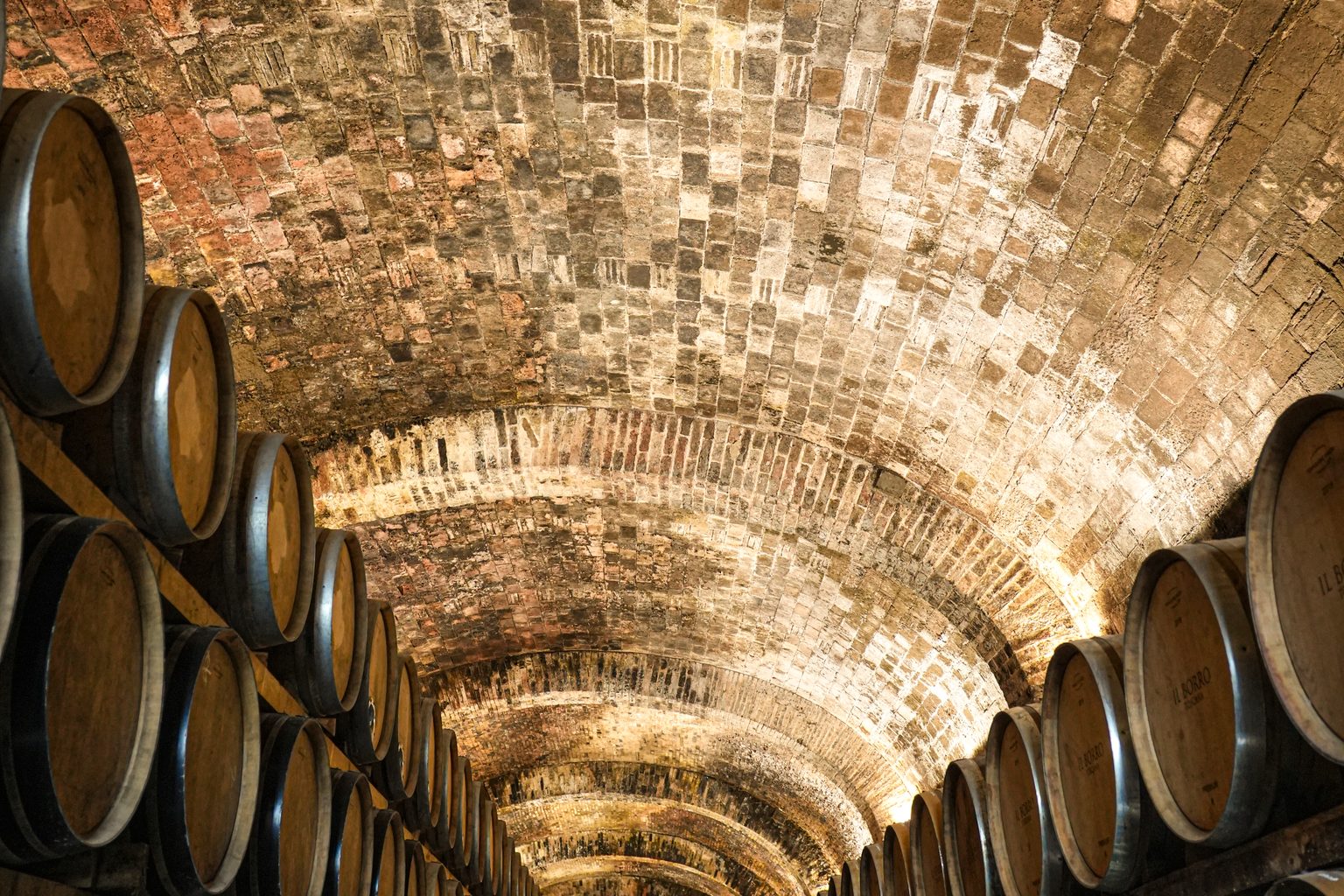
Il Borro is evolving its wine identity through amphora-aged wines like Petruna and expansion into Brunello di Montalcino. "Each project has to bring something unique. Not just more wines, but a clearer, stronger identity built over time."
The Brunello investment is "a long-term investment that strengthens the overall profile of Il Borro," while Pinino, one of the founding estates of Brunello di Montalcino DOCG, "dating back to the early years of Brunello di Montalcino DOCG," reinforces historical authority and authenticity.
For beverage programs, the lesson is that wine curation should reflect estate or sourcing narrative, not merely product availability. Premium positioning supports margins and guest experience equally.
What Guests Expect — and How Operators Can Deliver
The next generation of diners "crave authenticity: something real, unfiltered, and deeply human. Luxury is defined by the quality of experience and is something intimate, meaningful, and sustainable. It invites us to slow down, to reconnect with our senses, and to appreciate the essence of things."
For operators, this means menu design, sourcing transparency, staff knowledge, and sustainability commitment must align visibly. Guest expectations now center on coherence between what is claimed and what is experienced. Operators who invest in supply chain visibility, staff training, and measurable sustainability practices will command pricing authority and loyalty that commodity-focused competitors cannot match.