The 45th parallel runs through Bordeaux and Piedmont—historic wine regions that command premium pricing and limited allocation. That same latitude cuts straight through northwest Michigan's Traverse Wine Coast, where exceptional wines are produced at significantly better value, with direct relationships and reliable availability that established regions simply cannot match.
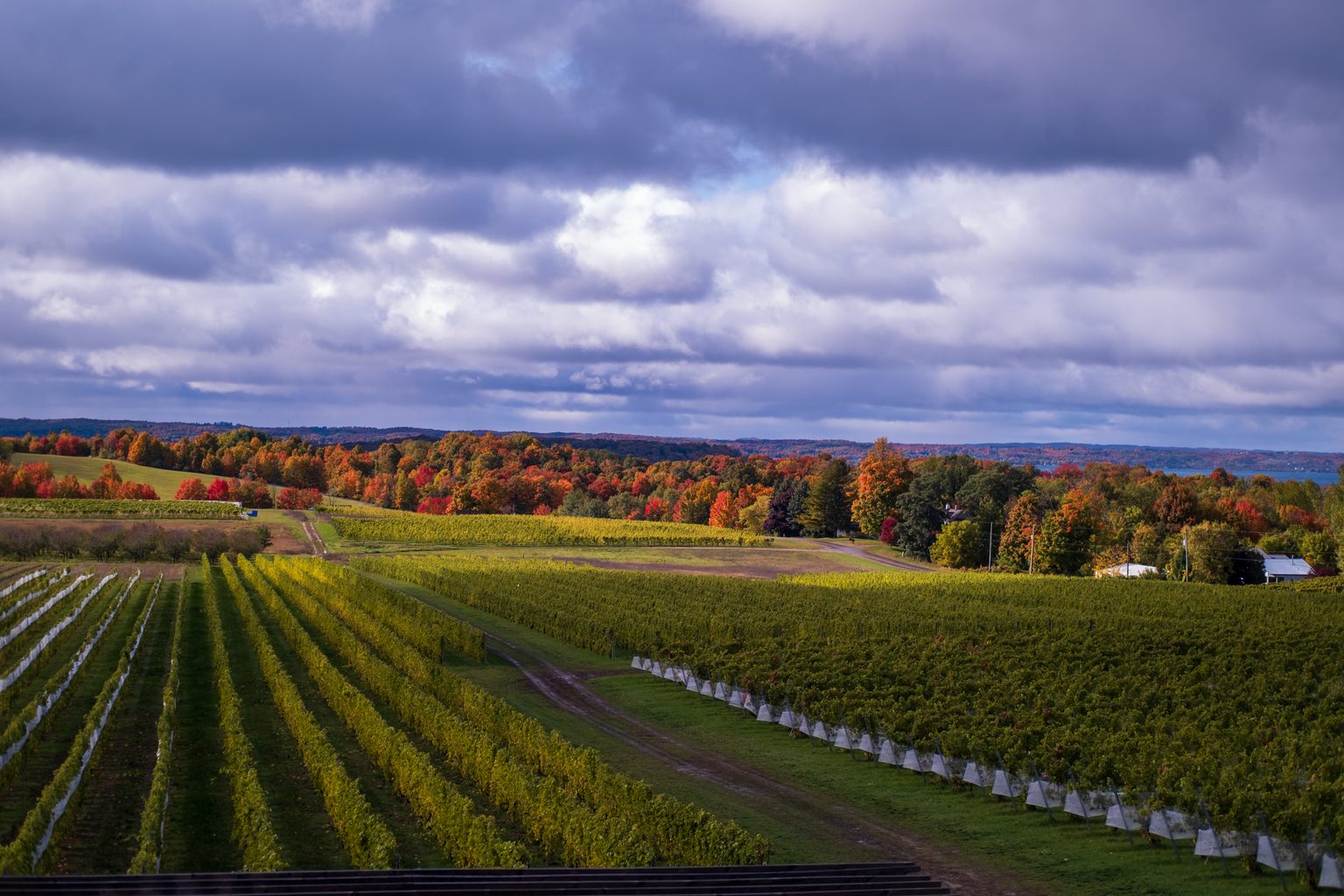
For restaurant operators and wine decision-makers, this matters: Traverse Wine Coast represents a strategic sourcing opportunity. The region encompasses wineries across the Leelanau and Old Mission Peninsulas, two distinct landmasses buffered by Lake Michigan and Grand Traverse Bay. That water body moderates temperature, softens frost risk, and stretches the growing season long enough for grapes to develop structure, bright acidity, concentrated aromatics, and natural balance—the exact profile that builds credibility on a wine list without inflated cost-of-goods.
Old Mission Peninsula: Cab Franc and Sparkling Wines
Old Mission Peninsula's well-drained sandy soils produce Cabernet Franc of surprising elegance alongside Gewurztraminer that balances floral character with restraint, and sparkling wines with the tension that justifies premium wine-by-the-glass pricing. At nineteen miles long and flanked by water, the peninsula's geography creates the exact conditions that produce wines with the complexity and structure that sommeliers recognize and guests remember—without the allocation headaches or pricing pressure of California counterparts.
Leelanau Peninsula: Riesling, Chardonnay, and Pinot Noir
Leelanau Peninsula's glacial soils produce Riesling that competes directly with German producers, alongside Chardonnay and Pinot Noir that command comparison to cooler-climate Burgundy—not through imitation, but through similar land logic. For operators building wine programs around terroir-driven selections, these are wines that create narrative depth on the menu and justify wine pairings without defensive pricing.
Direct Relationships and Reliable Availability
Most Traverse Wine Coast wineries ship directly, and those that don't connect operators to established distributors. Unlike allocation-constrained regions, these producers actively work to build restaurant partnerships. The accessibility extends geographically as well: Chicago sits within a five-hour drive, and over twenty direct flights connect the region to major cities, making producer visits and sommelier education trips feasible investments that strengthen wine program coherence and staff expertise.
This August, the second annual Traverse City Food & Wine Event draws James Beard-recognized chefs and the wines of both peninsulas across farm settings, demonstrating how food and wine culture here translates directly to farm-to-table menu applications and progressive wine programs that differentiate operators from competitors.
For operators seeking distinctive wines with reliable availability, favorable margins, and producer accessibility that supports genuine wine program education, Traverse Wine Coast delivers what established regions cannot: quality that earns list credibility, availability that eliminates allocation frustration, and producer relationships that build staff knowledge and guest education. The wines follow you home. More importantly, they stay on your list.
Traverse Wine Coast spans the Leelanau and Old Mission Peninsulas in northwest Michigan. For sourcing information, visit traversecity.com/traverse-wine-coast.